Beyond Pride: Spaces at Home and Away

Pride Month is upon us, and I’ve been reflecting. As a proud member of the LGBTQ+ community, I’ve been spending a lot of time recently thinking about the importance of inclusive, positive, and proactive community spaces.
Inclusive Spaces
A couple of weeks ago I went to the launch of Lonely Planet’s new LGBTQ+ Travel Guide. Until recently, if you wanted to know which parts of a city or country were safe, or where you could actually relax and be yourself, you had to rely on word of mouth – tips from friends, stories from the community, or scouring online forums. It always felt like you had to be part detective just to plan a trip.
So seeing such a major travel brand put out a guide that is packed with practical info and shaped by Queer voices from around the world is huge. What sets this guide apart is each destination is introduced by local LGBTQ+ residents who share personal insights, recommendations for queer-friendly businesses, cultural highlights and must visit spots. It’s not just about where to go, but how to feel safe, seen, and celebrated when you get there. Sitting down with my girlfriend, flipping through these pages and reading about places where our community thrives – it’s a whole new beautiful feeling.
Work & home
And it’s not just about feeling safe when we travel, it’s also about feeling safe on our doorsteps – and that includes at work, and in co-working spaces. When you walk into a workspace you want to know you can bring your whole self to the table without worrying about judgement, discrimination, or having to hide who you are. Safety isn’t just about physical security, it’s about emotional and psychological comfort too. There’s something powerful about being surrounded by people who get it, where you can chat over coffee, lunch, or just get on with work knowing you’re in a space that has your back.
Why does this matter? Because when you feel safe, you’re free to focus on work, be creative and build genuine connections. Studies show that LGBTQ+ safe environments foster a culture where people can embrace their true identities, leading to stronger community bonds, higher job satisfaction and more opportunities for collaboration and growth, unlocking potential. Places that empower LGBTQ+ professionals to thrive, innovate, prioritise inclusivity and safety are vital.
Inclusivity in coworking spaces
Coworking spaces, such as our very own Tribe Porty, have the opportunity to not just offer a desk and wifi, but to be real hubs of belonging for the LGBTQ+ community. It’s more than just having flags up in June (although that is lovely!), it’s making sure there are clear policies against discrimination, having gender neutral toilets, hosting LGBTQ+ events, and having staff who genuinely get what inclusion means. Another really important thing is listening to LGBTQ+ members, inviting us into the conversation and being open to change as needs evolve.
At Tribe Porty, fostering an inclusive and welcoming environment for the LGBTQ+ community starts with small but meaningful actions. Visible signs of support, like Pride flags, and collaborating with Porty Pride, using inclusive language across our platforms, and having gender-neutral facilities help signal that all identities are respected and celebrated here. We are committed to policies that protect against discrimination based on gender identity, gender expression, and sexual orientation, and we’re intentional about using gender-inclusive language and inviting members to share pronouns if they feel comfortable.
Creating Inclusive Culture
Inclusion also means cultivating a community culture where LGBTQ+ members feel seen, valued, and supported. We aim to reflect diverse voices in our events and storytelling year-round, offering space for conversations, creativity, and connection. We’re always listening and learning, welcoming feedback from our community and making space for continuous reflection and growth. Because true inclusivity isn’t a checklist. It’s an ongoing, collective effort rooted in care.
When spaces do that, they become places where we can all show up as ourselves, connect, create and feel right at home. Which ultimately is what community is all about.
Soapbox: Story Sessions
Soapbox and Tribe Porty are delighted to welcome you to another evening of Story Sessions! Join us on June 6th from 6pm for an evening of storytelling—a space to gather, connect, and be inspired by true stories from our community. Story Sessions is all about sharing real experiences: a place where voices are heard and celebrated.
This month, as part of Porty Pride, we’re shining a light on Queer Joy; a celebration of living authentically, loving boldly, and finding happiness in both the everyday and extraordinary moments of queer life. It’s about the moments that make us feel safe, loved, and empowered, and about the community that surrounds us with acceptance and support.
Storytelling is one of the oldest ways we connect as humans. Stories have the power to make us laugh, cry, reflect, and feel less alone. Through sharing and listening, we make sense of the world and discover authentic connection with each other.
Whether you come to share your story or simply to listen, you’ll find a welcoming community ready to embrace and uplift you.
Click here to find out more and book your spot.
Summer Party 2025
Join us for a day of creativity, live music, and great food at Tribe Porty!
Mark your calendars for Saturday, 7th June, as Tribe Porty comes alive with a vibrant mix of workshops, live performances, and delicious food. This free, family-friendly event is open to all. This year, Edinburgh Tool Library will be opening the workshop up for a special pride workshop in support of Porty Pride.
During the hands-on workshop you’ll craft your very own pride noise makers. In this 45-minute session, you’ll be invited to create a wooden ratchet noise maker – before painting your creation in brilliant rainbow colours at our decorating station!
Whether you’re a seasoned maker or have never stepped foot in a workshop, this family-friendly activity welcomes everyone to express themselves and join in the Porty Pride celebrations.
Please note: Booking is only required to make a ratchet noise maker. We will be operating a free, drop-in simple bell-and-ribbon wand making session from 10am-2pm which is suitable for all ages, where booking is not required.
Find out more here.
Thanks for reading,
Ellie
Thanks for reading. As always we’d love to connect and hear your thoughts. As we look ahead to the next 10 years, we’d love to know: What would you love to see more of in the future of Tribe Porty?
Mailchimp signup form
Celebrating Community
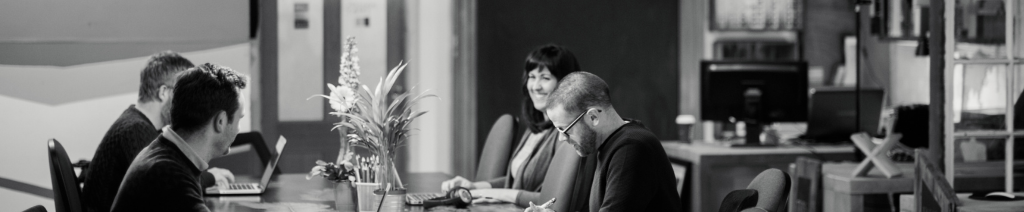
14th May marks the third European Coworking Day, a day to celebrate coworking and community, and our impact on individuals and society, through events organised by and taking place in coworking spaces all over Europe.
Celebrating 10 years of Tribe Porty
This year also marks a special milestone for us, 10 years of Tribe Porty. Home to over 145 members, we support a diverse community of social entrepreneurs, freelancers, charities, SMEs, and enterprises. From photographers and graphic designers to environmental consultants and translators. We also engage with our wider community through Tribe Talks, community events and workshops. Last year alone an estimated 1,275 folk came to Tribe for an event or workshop.
At Tribe, we believe a supportive environment that sparks creativity and collaboration benefits businesses, individuals, and the wider community. Alongside our coworking spaces, you’ll find like-minded organizations, including The Edinburgh Tool Library, Velow Bikeworks, Portobello Natural Health, Sodak, and The Pilates Studio Edinburgh.
More than coworking
For us, coworking is about more than a desk and a chair; it’s about connecting people. Personal and professional growth often go hand in hand in coworking spaces, where communities of like-minded individuals come together. When done right, coworking not only fosters collaboration but can also have a profound impact on health and wellbeing.
So, we’re asking our community: What do you get from coworking here that you don’t get working from home or elsewhere? How does being part of Tribe Porty influence your creativity, your sense of belonging, or even your daily motivation?
At Tribe Porty, we’re proud to create a space where community thrives and individuals flourish. One of the most beautiful aspects of coworking is the friendships that bloom along the way. These connections enrich our lives and our work, making every day a little brighter.
Finding your community
Studies show that 84% of people feel more motivated and engaged in a coworking environment. At Tribe Porty, community is central to everything we do, shaping a space where creativity and connection flourish. Dani reflects, “Tribe has become something far greater than I envisioned a decade ago. What started as a place to gather, create, support, and share resources has grown into a true community—a space filled with incredible people and genuine connection. Tribe is more than a coworking space; it reflects what collaboration, kindness, and shared purpose can achieve.”

Ten years of Tribe is about more than time passed, it’s about the friendships formed, ideas launched, and the meaningful work that has happened under this roof. Without the people, we are just a building. With that in mind, we wanted to connect with our community to see why they love being a part of Tribe Porty and what brings them back time and again. Here’s what they had to say:
“Since joining Tribe I have the chance to talk to friendly and interesting people during the work day, which is a welcome change! Working remotely, I value the push to get outside and interact with people, as well as the feeling of having greater boundaries between work space and home. Tribe has also been a great place to find encouragement and inspiration to try new things!”
“Tribe Porty has a positive affect on my wellbeing; it’s much easier to be here than in my workplace office. I enjoy having people around me and I can bring in my dog Freddie, which is hugely beneficial. People are friendly and coming to Tribe allows me to have a connection in my community that I wouldn’t otherwise have, I look forward to coming here!”
“Tribe Porty is so conducive to making new friends. Shared meals, dogs to snuggle, and coming in regularly have all been key for me in making new connections. Over time, I’ve gotten more and more comfortable in the space and familiar with the other ‘regulars’ and I’ve made a number of friends I see inside and outside of Tribe.”
“The team shows such genuine warmth and care for the co-workers, and also keeps the vibe lighthearted and fun at the same time. I’ve attended the seasonal parties, a couple of games nights, most of the coffee mornings and lots of social lunches. I’ve made it to a Soapbox night and a Tribe Talks, too! They’ve all provided the opportunity to connect with some new people or people I may not see that often at the hotdesk table.”
To find out more about joining Tribe Porty including our different coworking options, click here.
Thanks for reading. As always we’d love to connect and hear your thoughts. As we look ahead to the next 10 years, we’d love to know: What would you love to see more of in the future of Tribe Porty?
Mailchimp signup form
Psst, as part of European Coworking Day we are offering one free day of hotdesking to new coworkers. Spaces are limited, book here.
The fundamentals of failing

I’ve been thinking a lot about failing recently and actively seeking to do more of it. You could argue I’m trying to rewire my brain to appreciate the fundamentals of failing. Not to brag, but I have a plethora of things I am good at. I’d say, naturally good at… School was easy, university even easier (I mean it was an art degree.) And there it is, did you notice? Something I’ve also been very, very good at is downplaying my achievements.
Failure is emotional but necessary
For me, failure feels gut-wrenching, upsetting, and deeply emotional. I know I don’t take criticism well (sorry, Dani), but I also struggle to fully appreciate my successes. When I accomplish something, my mind often jumps to dismissive thoughts: “Anyone could do that,” or “So-and-so could do it better.” This persistent self-doubt is often called ‘arrival fallacy’, the illusion that reaching a goal will bring lasting satisfaction. Or, even more frustratingly, the dreaded and well known ‘imposter syndrome.’
The reason this has been on my mind recently all started with a 10K trail run. I have enjoyed running now for 4-5 years, it’s something that brings me calmness and joy. It helps me notice the seasons change, be around nature and my thoughts. Despite this, I’ve always had a fear around trail running and something I would blame my body for not being up to.
Letting go of external validation
Anyone who sat with me for lunch over the past couple of months at some point will have heard me tell a derisive story about my partner’s parents signing me up for a 10K trail run at Glentress. This particular run covered 300 meters of elevation in the first 5KM, and let me tell you, it was cold at the top. Despite being full of dread masked in my humor and sarcasm, I went along with my only goal being to cross the finish line.
Within the first ten minutes of running, I was quickly at the back of the pack. Clearly, I was surrounded by very serious runners. A man in his 70s jogged alongside me and jeered, “I think we will be seeing a lot of each other.” He wasn’t wrong. I stomped my way up the hill, taking in the views along the way, slowly slid my way across the top avoiding ice patches, and threw snowballs at my friend. On the descent, the sun came out, and it was magic. I looked up at the trees, took in some deep breaths, and quickly made my way to the finish line. I did it, and I came dead last.
“I felt my lungs inflate with the onrush of scenery—air, mountains, trees, people. I thought, “This is what it is to be happy.” Sylvia Plath
Finding joy in the process, not just the outcome
Would I do it again knowing I would come last? Yes! This could be the first time in my life where I was elated to fail. I did not give a rat’s arse about anyone else or their stats. All that mattered was the feelings I had along the way and the fact that I crossed the finish line!
Failure is misunderstood, and we avoid it at all costs. But to achieve and to grow, we must first fail. Our obsession with failure allows our failures to define us and keeps us from trying and from being open to experiences. On the other hand, when we do achieve, it is all too easy to downplay or minimize our accomplishments.
“Success is liking yourself, liking what you do, and liking how you do it.” Maya Angelou
To live well, we must remain open, curious, and most importantly, vulnerable.
Embracing discomfort and uncertainty
The truth is, failure is only failure if we allow it to be. What if we reframe it as learning, as progress, as proof that we are stretching ourselves beyond the confines of comfort? What if we measured our successes not by external validation but by our own growth, by how much we dared to show up even when we weren’t sure of the outcome?
That trail run wasn’t about time or placement, it was about pushing myself to go that bit further, about showing up even when I was certain I’d struggle. And in that struggle,I found joy in simply being in motion.
So maybe failure isn’t the thing to avoid, it’s the thing to chase. The more we appreciate the fundamentals of failing, the more we grow, the more we truly live. And that, to me, feels like the greatest success of all.
“Show me a man who has never made a mistake, and I will show you one who has never tried anything.” Albert Einstein
Thanks for reading,
Alice
You can read all of our previous blogs by clicking here. Make sure you’re subscribed to our newsletters by filling out the form below:
Mailchimp signup form
More than coworking

Annual Report 24/25
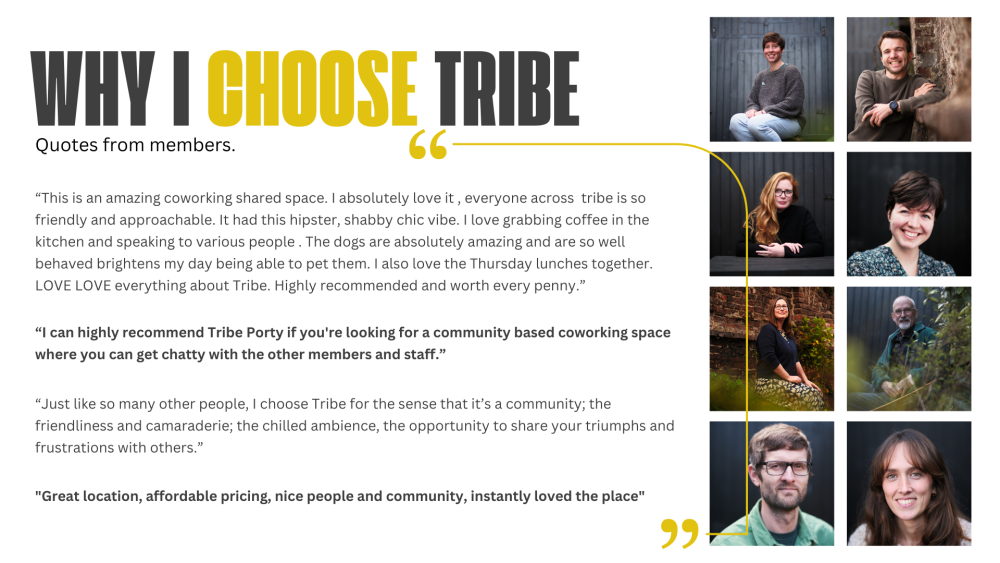
Do you remember the first coworking space you walked into? How many have you tried since? And, most importantly, what makes you stay? Each year, we ask our members a simple yet telling question: Why do you choose Tribe? The answers consistently affirm that we’re achieving our mission as a true community coworking space.
Coworking is about more than shared desks; it’s about connecting people. Personal and professional growth often go hand in hand in coworking spaces, where communities of like-minded individuals come together. When done right, coworking not only fosters collaboration but can also have a profound impact on health and wellbeing. At Tribe Porty, we’re proud to create a space where community thrives, and individuals flourish.
A year in review
2024 has been a great year for Tribe Porty. From receiving the Places for Everyone grant to improve our front yard space to hosting another fun filled summer party. We also relaunched Tribe Talks and kicked off with a series on Sustainability. Tribe Talks welcomed 247 attendees this year—120 more than last year! We’re thrilled to see our efforts making a difference and can’t wait to build on this success. Series 2 launches this February and will focus on women’s health, wealth, and wisdom.
We had 218 day passes booked over the course of 2024. Day passes are an important offering at Tribe Porty as we are not a members only club. We understand that a reccuring membership is not for everyone.
2024 saw us welcome 53 new members, our largest demographic for coworkers remains folks working in the Arts, Culture & Entertainment sector. Across the board, the mix of sectors in our community has stayed pretty consistent, which shows how balanced and diverse Tribe continues to be.
One of the coolest things? Most of you found us through word of mouth! That speaks volumes about the love and belief our members have for what Tribe offers. It’s more than just a workspace—it’s a community worth sharing. And when new faces join because of your recommendations, it keeps our Tribe collaborative, creative, and full of energy.

What’s next?
Each year, we gather valuable feedback from our coworkers to understand their experiences and identify areas for growth. This feedback is used to shape our team meetings. We were already able to action most constructive feedback which includes:
- Updating and enforcing shared policies and common courtesies to foster a harmonious coworking environment.
- In 2025 will plan more creative workshops both during and outside office hours, not only to build our community but nuture the wellbeing of our coworkers.
- Upgrading furniture, ensuring comfort and usability.
- Improving signage for our building and to aid efficient recycling and kitchen cleanliness.
- Installing better lighting in the upstairs coworking space for a more productive and homely atmosphere.
- Community Solar Pannels we are currently liaising with Porty Solar Project to explore the potential for community owned solar panels hosted on our building. These contribute to local funds.
When reviewing the feedback we were overwhelmed by consistent praise for our dedicated team and the social opportunities, which remain highlights of the Tribe Porty experience.
Ten years of Tribe Porty
This year we celebrate 10 years of Tribe Porty. The milestone is about more than time passed—it’s about the friendships formed, ideas launched, and the meaningful work that has happened under this roof.
Tribe aims to provide a space for nurture and growth of human potential through supporting local people in work, art and quality of life. This is done through practical opportunities and support and encouraging connections. There is evidence that people-powered health not only brings transformational change, but also economic benefits.
Over the next year, we will continue to grow and strengthen our community by fostering exciting new collaborations with local businesses. We are also developing online programs focused on providing holistic business support for our members. Alongside these online offerings, we plan to launch new networking events designed to facilitate the exchange of knowledge and resources among our members. Additionally, we will nurture and enhance our connection with our community through our podcast, Working For Progress.
Thank you to everyone who has been part of our story so far. Here’s to the next chapter and all that we will create together!

Read the full Annual Report here
You can read all of our previous blogs by clicking here. Make sure you’re subscribed to our newsletters by filling out the form below:
Mailchimp signup form
Nourishment

To know how to feel nourished is fundamental to our wellbeing. Nourishment comes in many forms, not only physically but mentally and emotionally. On the surface, nourishment can take the form of foods, from the way we eat to where we eat and who with. As well as sustenance, food is a great way to gather people and nurture in person connections.
Community
Beyond food, our sense of community can be one of the most profound sources of nourishment. When you find yourself surrounded by people who support, challenge, and uplift us creates a space for growth and belonging. Whether it’s spending time with family, working alongside colleagues, or participating in shared activities, these connections nourish our spirit. In a world that can often feel isolating or fast-paced, finding and being part of a community is more important than ever.
For others, nourishment comes in the form of quiet moments of solitude and reflection, a time to rest, recharge and refocus. You might find it in a quiet moment of meditation, reading a book that inspires us, or spending time in nature.
Finding nourishment
As we move into the darker months of winter, knowing how to nourish ourselves becomes even more essential. The cold, dark days can feel draining. Many people, especially in places like the UK, associate winter with a reduction in energy and happiness. The shorter days often bring a sense of anxiety or dread. This makes it easy to fall into the trap of doing less and feeling less nourished.
How to Winter: Harnessing Your Mindset to Thrive in Cold, Dark, or Difficult Times suggests that winter can be a season of opportunity if we shift our mindset. It encourages us to embrace winter as a time for restoration, inviting us to transform darkness into an asset. By finding activities to look forward to that align with the season, we can see winter as a season of restoration and opportunity.
“Do something that you can look forward to that takes advantage of the darkness and turns it into an asset”-Kari Leibowitz
Undoubtedly nourishment is about taking care of our minds and souls. What activities help you feel restored? When we prioritize these practices, we acknowledge that our well-being is not just about what we consume, but also how we nurture our inner beings. There’s no right or wrong way to find nourishment; what’s important is understanding your own needs and making the time to practice what brings us joy and fulfillment.
Each of us has different ways to nourish our body, mind, and soul, and this month offers a chance to explore what fills us up in all areas of life.
An invitation to gather
The Story Sessions is back! Tribe Porty is collaborating with Soapbox to bring an evening of storytelling, join us on November 8th from 6pm to gather, to be inspired, to be heard, to tell and to listen to stories.
The theme is Nourishment – How do you feel nourished? Is it through food? Being in community? With family and friends? How do we nourish our body, mind and soul?
This session we will be treated to a menu of canapés from Còmhla, a luxury dining company founded by friends Helena and Joanna in Edinburgh. Brought together over a passion for wild natural Scottish ingredients, Còmhla’s philosophy is to celebrate the seasonal. With a deep-felt desire to sustain both environment and community, all that Còmhla does is driven by creativity, consideration and social-consciousness.
Tickets for this event are pay-what-you-can to feed back in to our communities. Click here to find out more and book your space.
Thanks for reading,
Alice
You can read all of our previous blogs by clicking here. Make sure you’re subscribed to our newsletters by filling out the form below:
Mailchimp signup form
Holding Space

Meet Loretta
We wanted to take this month’s blog as an opportunity to introduce you to Life Celebrant, Death Doula and friend of Tribe, Loretta Dunn. Loretta has a special interest in living well and dying well. Her journey so far has included a long career in nursing and midwifery, she is a member of The Institute for the Study of Birth, Breath and Death, and an EASE Facilitator (end of life aid skills for everyone) with the Scottish Partnership for Palliative Care. She is passionate about bringing death out of the shadows as a means of helping us to live our best life in the present moment.
Compassion and love are at the heart of her work. Loretta recently reached out to us to express her interest in running The Death Curious Cafe at Tribe Porty. Simply put, this gathering is an open invitation to gather and discuss mortality in a supportive and progressive way.
What is a Death Cafe?
Death Cafes first launched in Switzerland in 2004 and have since spread around the world. This has been encouraged through a growing number of folks moving towards death positivity and away from death denial. The key of this is that through understanding and welcoming our own mortality we improve the quality of our lives. As a society, it is more valuable than ever to hold space for conversations about death. A survey by the charity Dying Matters reveals that more than 70 per cent of us are uncomfortable talking about death and that less than a third of us have spoken to family members about end-of-life wishes.
Holding Space
In the UK, the topic of death is avoided due to a combination of cultural, psychological, and social factors. Many of us not only fear death itself but the potential pain, loss of control, and uncertainty it brings. Psychologically, people often engage in death denial to shield themselves from these anxieties.
In the book, Continuing Bonds: New Understandings of Grief, the authors and researchers challenge traditional views on grief which emphasise the need for detachment. The authors argue that grief is not about “letting go”. Rather it is about finding a new way to incorporate the presence of the deceased into one’s life. This could be in the form of personal rituals, keeping mementos and maintaining an inner dialogue with the loved one.
You can see this approach manifest itself through modern technology with the keeping of ‘memorial profiles’. Continuing bonds and having open dialogue around death has become an essential part of death doulas work and perhaps an important key to reopening the conversation around death and grief.
“The goal of grief is not to sever bonds, but to reweave them into the fabric of life.”-Continuing Bonds
The importance of community
There are many cultures that have religious or spiritual rituals that provide the building blocks for both accepting and preparing for death. In the past, even in the UK, death was a communal experience with both community members and family taking an active role in end-of-life care and rituals. Philosophical traditions, such as Stoicism or Buddhism, death is seen as an inevitable part of life, and whether it happens early or late is simply a fact of existence, not necessarily a matter of fairness.
Due to the breakdown of close-knit community structures and families often living far apart, death has been removed from everyday life and conversation. Thus encouraging an environment where it is easier to avoid and therefore removing any sentiment of acceptance or feelings of fairness.
Advances in medical technology have also shifted the perception of death to be something that can and should be delayed. In the UK the percentage of people who died in hospital in 2022 was 43.4%. Arguably this contributes to the notion that death is something to be resisted or “fixed,” rather than embraced as a natural end.
Of course the practice of guidance is not new and death is not an unknown phenomenon. A certified end-of-life doula, Christy Marek suggests that the lack of community ties in today’s society has led to the lack of conversations around death and resulted in the overwhelming need to contract a trained professional.
“In America, a few generations ago, our communities were doing this work,” she said. “The reason the role is showing up in a formalised way now is that we don’t have those community ties any more, not in the same way, and certainly not the same level of responsibility to each other as used to be woven into our communities.”- Christy Marek
The place of a Doula
Doulas help to relive these challenges and open up the conversation in a relaxed and informal way. Something we must also consider is that death denial is the overwhelming norm, our individual wishes for end of life care are not considered until late on. The result is that people struggle to have their wishes fulfilled.
All of the above contributes to a whole host of anxieties, the biggest problem being that we will never achieve a “good death”, one that aligns with our own values, desires and needs. This is a big conversation and one that cannot be fixed into one blog post, but we can certainly hold the space for it. When we are willing to take responsibility for our life, we can make peace with death.
An invitation to hold space
Join Loretta for our first Death Cafe on 24/10/24, she will also be joining us at Tribe for Social Lunch on 03/10/24. This will be a safe environment for sharing and exploring a deeper understanding of spiritual wellbeing for living well to die well over tea, coffee and cake. This is a pay-what-you-can event with a £5 suggested donation. Click here to find out more and book your space.
“Love has triumphed from the enfoldment of my inner circle—my closest friends and family. Engaging in open conversations about life and death has woven tighter bonds among us. Death, a shared human experience often wrapped in silence, has become a pivotal topic of our discussions. Through this, I’ve gained invaluable insights about the inevitable but more so about how to live.”-Dani Trudeau on conversations about death
Thanks for reading,
Alice
Read more: Exploring the evolution of grief & Living longer
You can read all of our previous blogs by clicking here. Make sure you’re subscribed to our newsletters by filling out the form below:
Mailchimp signup form
Hello, how are you?
Friendships and community are integral to our wellbeing and a good conversation can leave us feeling understood, energised and revived.

Losing community
Friendships and community are integral to our wellbeing. Despite this, I’ve noticed a similar narrative amongst friends, coworkers and folk posting online. This is that friendships are hard to come by and even harder to keep. In adult life, friendships require a certain amount of dedication and maintenance. Unfortunately, we often do not have time or even the energy needed to support the functioning of a good friendship.
As we age and grow priorities to shift, we get busier and life provides less opportunities for connection which become harder to come by if we let them slip away. Long term friendships require consistency, an ongoing dance of give and take.
Science has repeatedly studied and proved that friendships bring us a wealth of benefits. From keeping us mentally and physically healthy to improving our creativity and even reducing our blood pressure. So why don’t we value and maintain social connections as much as we should?
Modern life is often fast-paced and demanding, leaving little time for nurturing relationships. The rise of digital communication can create a false sense of connection, reducing face-to-face interactions. The pressures of work and daily responsibilities can make it challenging to invest in social connections, even when we recognize their importance.
Bridging connections
Humans have a fundamental need for interaction. Conversations connect us, sparking new ways of thinking, resonating with our emotions, and building bridges between us. However, we each require different levels of social connections and companionship.
A meaningful conversation blends opinions, experiences, and ideas. When a natural state of flow is achieved, it opens the heart and forges genuine connection. In essence, conversation links us together, and nurturing it involves genuine curiosity. To engage in meaningful conversation it is important to have interest in the people you encounter daily, ask questions, and avoid ending sentences in a closed manner.
By definition, conversation is improvisational. As we engage in dialogue, we uncover new aspects of ourselves. At its best, a conversation bridges the gap between our physical selves and our minds. A good conversation leaves us wanting more, with questions still unresolved. I’m sure I can vouch for many Triber’s that our weekly Social Lunch has left us with this feeling as we often attempt to put the world to rights!
Place and time
So how do we in the busy modern day seek physical spaces where we can find ourselves lost in conversation? Social connections require a special kind of place. A place where yourself and others have time, freedom and capacity to get lost in conversation. Third Spaces, a term coined by the sociologist Ray Oldenburg, are spaces beyond work and home. A sacred space where we can interact both freely and casually.
“Life without community has produced, for many, a life style consisting mainly of a home-to-work-and-back-again shuttle. Social well-being and psychological health depend upon community.”- Ray Oldenburg
Modern commodities and capitalism have led to a scarcity of third spaces. A true Third Space is a physical place where you are under no obligation to be there and the presence of a “regular” is more than welcome. Though rare, these spaces are essential to neighborhoods and can significantly enhance quality of life, well-being, and health.
This is why free events, like Tribe Talks, are so vital to Tribe as a community coworking space. We continuously seek new and exciting ways to welcome the wider community into our space because community is at the heart of Tribe. Our commitment to inclusivity and engagement drives us to host a variety of events, workshops, and social gatherings that cater to diverse interests and needs. By doing so, we aim to create a vibrant, supportive environment where ideas can flourish, collaborations can emerge, and everyone feels a sense of belonging.
Finding your community
As with everything, it is about finding a balance but also actively engaging and seeking the types of connections you crave. According to British anthropologist Robin Dunbar, the “magic number” for an individual’s community is 150. That’s 150 connections that make up your social network. Dunbar split’s these connections into different circles, or you could call it communities. The most important circle being the ‘inner’, this includes family and long term friendships. The rings extend outwards from there and include distant friends, fleeting friends, coworkers and folk who you occasionally cross paths with. This could include people met in a pub or coffee shop, people you pass on walks or places of common interest.
“What determines these layers in real life, in the face-to-face world… is the frequency at which you see people,” says Dunbar. “You’re having to make a decision every day about how you invest what time you have available for social interaction, and that’s limited.”
What I appreciate about Dunbar’s theory is its emphasis on the importance of cultivating depth in our communities, friendships and community are integral to our wellbeing . It’s not just about having close friends and deep relationships; the acquaintances and casual connections that come and go in our lives are equally vital to our daily health and happiness. It also highlights the importance of finding and frequenting places to nurture these relationships. Psychologist Holt-Lunstad similarly concluded that being within a large supportive social network reduces the risk of mortality after a chronic illness by an enormous 50%.
Your attention is a gift
Making friends isn’t that different from when we were kids, the only difference is intention. Making new friendships should be both interesting and fulfilling, stay curious! Intention is also important when selecting where to dedicate your time. At the forefront of coworking is community, the beauty of coworking is the people you meet and the connections you make. Creating and actively participating in in-person events can increase a sense of connection. Choose the places you visit with the intention of gravitating towards people and, with some time, social connections will form (and maybe even a new friendship.)
When we talk about curiosity it is also beautiful to remember that our attention is a gift. Engage with conversations actively and ask questions, maybe pop your phone to the side too! Through this self awareness we can become more approachable and friendly, in turn the people we engage with will return the favour.
“The deepest principle in human nature is the craving to be appreciated”-William James
Thanks for reading,
Alice
You can read all of our previous blogs by clicking here. Make sure you’re subscribed to our newsletters by filling out the form below:
Mailchimp signup form
A warm welcome to Ellie
Exciting news, our team has grown! We are welcoming Ellie to our team and we wanted to take the time to give her a warm welcome and introduction.
 Hey, I’m Ellie!
I first came across Tribe when Dani hosted TedxPorty here in 2016 and I volunteered to capture the event. I’d recently moved back to Edinburgh after living in London and it was one of the first community events I was involved with and I loved it. Since then I’ve attended other Tribe events and spent some time co-working. The community at Tribe is so welcoming and inviting that when a role came up it felt serendipitous.
Things that make me smile are a good cup of coffee, spending time with friends and family, hosting Soapbox events, time spent on the beach, dogs in clothes, working at Tribe! I love the community and the environment at Tribe. The way Tribe feels when you come in – everyone is friendly, I really enjoy the art on the walls, it’s a space that breeds belonging and my creativity flows here.
My working life & creative practice
Most of my working life has revolved around connecting with people; as a photographer having the opportunity to meet new people and discover what drives them, what their story is and how they express themselves is what I find endlessly fascinating.
I love, and have spent many seasons, capturing street style at London Fashion Week because I love seeing how people express themselves through personal style. My favourite personal project was one I undertook in 2021 called Love Stories; where I spoke to, and captured, over 100 people about someone, or something, they loved.
I’m currently in the planning stages of my next personal photography project, which I think will revolve around kitchen tables, dinner parties and portraits.
Creating community
My connection to the creative scene led me to CreativeMornings, where I volunteered with the Edinburgh Chapter for a number of years before starting my own event, called Soapbox, last year. We gather on the last Wednesday of every month to blether and meet like minded folk who freelance and are employed in the creative, cultural, tech and digital industries. It’s so lovely to see people come along who are brand new to the creative scene but also have attendees who have been doing it for 20 years. Everyone has something to offer and are there to connect.
Knowing how much being part of a community helped both my personal and professional life was the driving factor in starting Soapbox. Bringing other people together and helping them with their own journey is something that brings me a lot of joy. I’m currently working on the evolution of Soapbox and developing what events, along with our current monthly event, we might host.
I’m really looking forward to hopefully hosting some Soapbox events in collaboration with Tribe, but mostly I’m really happy to be part of Team Tribe and the community that exists here. I really like being part of organisations that are bigger than myself, and that seek to bring community together.
A quote that I love:
“I define connection as the energy that exists between people when they feel seen, heard, and valued; when they can give and receive without judgment; and when they derive sustenance and strength from the relationship.”- Brené Brown
Thanks for reading,
Ellie
You can read all of our previous blogs by clicking here. Make sure you’re subscribed to our newsletters by filling out the form below:
Mailchimp signup form
International Women’s Day 2024
As International Women’s day approaches we wanted to dedicate a blog post to all the fantastic and accomplished women here at Tribe.
Women’s work whether it is paid or voluntary is often hidden or at best undervalued. Not to mention that we are simply far too humble to even consider self promotion. We wanted to take a moment to share and shout about some amazing achievements and work produced by some of our members over the past year.
 Anna Moffat- Photographer
Anna Moffat is a photographer based in Edinburgh (and beyond). Her style revolves around capturing authentic moments with creativity and attention to detail and providing emotive and engaging images. Recently, Anna has photographed amazing individuals such as Dr. Merritt Moore who recently conquered her dream of being both a Quantum Physicist and a professional ballet dancer.
Anna has worked with Holyrood Magazine and recently picked up an award from PPA Scotland for her portrait of Labour MSP Pam Duncan.
“Thank you PPA Scotland for the award – I still can’t quite believe it! Also thanks to @holyroodmagazine for the opportunity”
Olivia Furness- Executive Director, Oi Musica 
Olivia Furness is a firm believer in music’s power to make change. She has designed and delivered a wide variety of projects and programmes that have brought benefits to both the community and people involved. In April 2023 Oli was awarded professional development funding to spend 2.5 weeks in Cuba studying various styles of Aforcuban percussion.
In 2023 Brass Blast took home the Community Award from Creative Edinburgh.
“We’re still buzzing after scooping the Community Award for our youth project Brass Blast at the Creative Edinburgh Awards in November! The project is a proactive response to the disproportionately low numbers of disadvantaged young people taking up instruments in East Edinburgh, so we are over the moon to be recognised for the change that Brass Blast is making in our community.”

Jo Tennant-Photographer & Founder, 20 photos
Jo Tennant is an award-winning photographer and founder of 20 Photos, a creative service that curates hundreds of digital photos into 20 beautiful fine-art prints.
In 2023 Jo had two family photographs shortlisted for the Scottish Portrait Awards:
“One photo was shot on my phone and the other on a 1980s film camera. Our own personal photos have importance and meaning and should be seen. We should photograph those we love and their idiosyncrasies which we want to remember. This is why I took those photos. Not for the awards- I just submitted the two photos I took this year that I loved the most”
Last year, Jo also had a feature in Stylist magazine about launching her business 20 Photos during the pandemic. She spoke to them about upskilling and taking the next steps. Read the full article here.
Rachel Mulrenan- Scotland Director, Wild fish
Rachel is the Scotland Director of WildFish, an independent charity in the UK campaigning for wild fish and their environment.
A significant area of focus for Rachel is the environmental degradation caused by open-net salmon farming. In collaboration with other like-minded organisations, WildFish calls for an end to this destructive industry. Open-net salmon farming has a hugely detrimental impact on wild fish and their habitats – from the spread of sea lice and disease to the environmental effects of the chemicals and antibiotics used on aquaculture farms.
Rachels work has featured in The Guardian and you can listen to a podcast she featured on about the damaging effects of Salmon Farming here.
 Briana Pegado- Author
It would be wrong of us to not mention our host for our International Women’s Day event, Briana Pegado.
Briana Pegado FRSA is an author, fellow of the Royal Society of Arts, and festival founder. With nearly a decade’s experience as an award- winning social entrepreneur in the creative industries in Scotland. She works as an anti-racism, governance, and strategy consultant particularly in the creative industries.
Briana acted as a trustee, vice, chair and Chair of the Young Women’s Movement from 2018-2023, then Interim Chief Executive. The organisation supports young women, migrant women, and other marginalised women by providing skills and employability services, advocacy and campaigning, as well as research on the lived experience of young women in Scotland
A central theme in her work is how disrupting systems, processes, sectors, and ways of thinking can facilitate positive change. Her new book Make Good Trouble: A Guide to the Energetics of Disruption launches on 09 April 2024 and is available for pre-order now. Find out more about Briana by clicking here.
Sandy Brindley, Kathryn Dawson and Niamh Kerr
Sandy is the Chief Executive Officer, Kathryn is the Director of Prevention & Training and Niamh Kerr is the Prevention Manager at Rape Crisis Scotland (RCS), Scotland’s leading organisation working to transform attitudes, improve responses and ultimately to end rape and sexual violence in all its forms.
RCS works with a network of 17 independent local Rape Crisis Centres across Scotland who provide trauma-informed support to more than 6000 survivors annually. It runs a national helpline with support and information for anyone affected by sexual violence open daily from 5pm – midnight, 365 days a year. They also support the National Advocacy Project to support anyone thinking of reporting or engaged in the system to navigate the justice process from start to finish. Its Prevention work takes an evidence-based approach. Working with young people in schools and communities across Scotland looking at issues like consent and healthy relationships. It also campaigns to change and challenge the attitudes that underpin sexual violence as well as on specific issues like funding for services and access to justice.
The support Rape Crisis Centres across Scotland offer can be truly lifesaving. When a survivor reaches out for that support, they need to receive it then. Not weeks or months later. But this is the reality facing too many survivors across Scotland. In 2021, the Scottish Government delivered emergency funding to tackle waiting lists. But even with this funding, demand for lifesaving Rape Crisis support is outstripping the resources available to Rape Crisis Centres to serve survivors. This emergency funding is due to run out in March 2024. If it isn’t extended, 28 specialist Rape Crisis support workers will lose their jobs meaning survivors will be forced to wait even longer for support. To support their campaign and find out more click here.
Reema Vadoliya-Founder, people of data
This year Reema joined Tribe as part of the Creative Informatics inclusive innovation working spaces fund. Reema is a tireless advocate for inclusion in data with expertise gained through multiple roles within the data industry and the founder of People of Data. Their mission is to challenge how organisations think about data in order to maximise impact and centralise inclusion.
You can listen to a podcast with Reema where she discusses the importance of looking at data inclusively. Reema emphasises the power of data by telling impactful stories .Click here to listen.
Reema will also be hosting our March Tribe Talks, this is a free workshop and is open to all. Click here to find out more.
 Louise Mason- Presenter, producer & Journalist
Louise Mason is a radio presenter, music journalist and producer. She produces the weekly podcast Changes with Annie Macmanus and regularly hosts music radio.
Last year with her cousin Fran she took on a Tuk Tuk challenge where they raced across Sri Lanka to raise money for Childrens Adventure Farm Trust.
“Between all the teams the donations so far have helped over 5500 families and counting”
Louise regularly interviews musicians and artists for radio and at music festivals. You can have watch some of her work by clicking here.
Recently, Louise also presented a show for a project called Peace Frequencies which she co-produced in a small team with broadcaster Gemma Cairney. It was a 24hr broadcast to mark International Human Rights Day. Louise’s own show gave voices to poets and artists who have contributed to the Manchester to Palestine compilation which raised money for Gaza.
You can find out more about Louise, listen to all her shows and donate to her charitable causes by clicking here.
Whilst International Women’s Day serves as an important day to celebrate women’s achievements, it is also a reminder that we must all still strive for gender equity in society. We must not settle. In doing so, workplaces and society at large can gain new perspectives, ideas and inspire inclusion.
Join us in celebrating International Women’s Day on March 8th 2024. We are hosting an evening of poetry and discussion with Briana Pegado. Click here for more information and book your ticket. All proceeds will be donated to Edinburgh Women’s Aid.
You can read all of our previous blogs by clicking here. Make sure you’re subscribed to our newsletters by filling out the form below:
Mailchimp signup form
Do good, Feel Good
This January, Tribe Porty has partnered with Vintage Vibes, an award-winning project tackling isolation and loneliness in Edinburgh. Volunteering has enormous benefits to our mental health, our communities and our local economy.

Why volunteering is good for your health
There’s a common misconception that volunteering is a completely selfless act and that you are some kind of superhero if you volunteer. It might surprise you to know that volunteering has some surprising major health benefits. Volunteering is good for your health and community. So it is something you might want to consider adding into your self-care routine.
Studies show volunteering helps improve your mental health and wellbeing. Helping other people triggers a release of the hormone oxytocin. This hormone has the effect of boosting your mood and counteracts the effects of cortisol aka the stress hormone in your body. When oxytocin begins to flow, blood pressure decreases, reducing social fears and anxiety.
Giving an hour or so a week can act as a circuit breaker to the everyday stress of work and home life. It can give you a change of scenery, the opportunity to talk to different people, more structure to your week and allow you to build confidence or learn a new skill. It can also help you reset and appreciate what is important in life by giving you more self-awareness when starting to sweat the small stuff.
Vintage Vibes
Nicky Shallcross is the Volunteer Recruiter for Edinburgh based Vintage Vibes, a project working to combat loneliness amongst over 60s by creating 1:1 friendships between volunteers.
Nicky explains her motivation for volunteering…
“After starting my own business in 2022, I started to feel lonely working from home on my own. I’d gone from a busy head office environment to working alone and being all departments. I realised that you don’t have to be elderly or living on your own to feel like this, it’s surprising at how quickly this can happen to anyone. I was familiar with Vintage Vibes and their work from their annual Christmas Card campaign. It made sense to help someone else who was feeling lonely too by becoming a Friendship Volunteer.
I completed my volunteer training, the Vintage Vibes team then set about finding me a “VIP” who had similar interests to me. For the past year I’ve visited my 85 year old friend Sheila every week for an hour or so. We talk about anything and everything and are always giggling. My family live down south so there is something grounding and familiar having someone who is older to talk to. She’s warm, caring and dispenses no nonsense advice just like my Grandparents used to. I always come away from our visits with a sense of calm.
Sheila never ceases to amaze me with her constant curiosity on what’s going on in the world. In the summer she went on a girl’s weekend to Blackpool and enjoyed watching the Glastonbury coverage. Her highlight was Elton John, she said she turned the volume up and had a dance around her living room. Aging is natural part of life; I really hope I’m as sprightly as her when I’m older.
I’ve taken Sheila to local places close to where she lives that she didn’t realise were there. She loves the Edinburgh Printworks and Grow Urban plant cafe. The staff recognise her and chat, it makes her feel seen and included. For Sheila’s 85th birthday we went to Maison De Moggy, sadly she had to give up her beloved cat during the pandemic and misses her dearly. Despite personally not being a big cat lover, we had so much fun! I really felt that feel good feeling seeing her so happy.
Volunteering has personally given me a massive boost to my own mental health and was exactly what I needed. I’ve made a friend and got to meet so many amazing people. It’s even led to a part time job opportunity with the charity so you never know what good things volunteering can lead to.”
Fighting isolation
According to a 2021 study conducted by Age Scotland, more than 200,000 older people in Scotland are lonely. This study found that 10% of people over 50 feel lonely all or most of the time. Age UKs follow up 2022 study highlights that right now in Scotland loneliness among older people is at record levels. 100,000 older people say they feel lonely all or most of the time. Two years of Covid lockdowns and living under restrictions which prevented older people seeing family and friends have left countless older people feeling acutely alone.
The Scottish Government have identified that social isolation and loneliness are significant public health concerns in Scotland. Loneliness is linked to increased risk of poor health and reduced life expectancy. A Connected Scotland – a strategy for building stronger social connections and reducing social isolation and loneliness hopes to address this. Volunteering plays a key part in the plan to help achieve this. Volunteering at Vintage Vibes can supports both health and community.
Community impact
Government funding cuts to services combined with the cost of living and the fallout from the pandemic mean charities are under more pressure than ever. Charities must now deliver critical community support services that local authorities cannot. Volunteers are pivotal to being able to do this.
In addition to the benefits for individuals, volunteering can also have a positive impact on local communities. According to Volunteer Scotland, volunteers contribute an estimated £2.26 billion to the Scottish economy each year. Volunteering can also help build stronger, more connected communities by bringing people of all generations together.
If you’re interested in varying your week, consider volunteering as way to do this as well as making someone else’s. Volunteer Edinburgh is a great resource for finding volunteer opportunities in your area to fit around your schedule and support organisations that align with your values, more information can be found here. If you’d like to find out more about becoming a Vintage Vibes Friendship Volunteer, please visit their website here.
Thanks for reading,
Nicky Shallcross, Volunteering Coordinator at Vintage Vibes.
An evening with Vintage Vibes
For our first Tribe Talks of the year we are collaborating with Vintage Vibes. Join us on 25th January from 18:30 for a fun evening hosted by volunteer coordinator, Nicky Shallcross.
Vintage Vibes is an award-winning project tackling isolation and loneliness in Edinburgh. The project, a partnership between LifeCare Edinburgh and Space at the Broomhouse Hub, started in 2015 as a fresh new way to combat isolation and loneliness among over 60s (called VIPs) in Edinburgh.
Vintage Vibes creates long lasting one-to-one friendships offering support, companionship and the opportunity for lonely VIPs to be more socially connected and active in their local community. Vintage Vibes are looking for volunteers of all ages (17+) from across Edinburgh.
This is a great opportunity to break the ice with Vintage Vibes and find out more about their work as well as how to volunteer. Nicky will introduce you to Vintage Vibes and their work and answer any questions about volunteering or how to refer someone who may benifit from their service.
Join us for a tea and a sweet treat, click here for more information and to register.
You can read all of our previous blogs by clicking here. Make sure you’re subscribed to our newsletters by filling out the form below:
 Top
Top