Nourishment

To know how to feel nourished is fundamental to our wellbeing. Nourishment comes in many forms, not only physically but mentally and emotionally. On the surface, nourishment can take the form of foods, from the way we eat to where we eat and who with. As well as sustenance, food is a great way to gather people and nurture in person connections.
Community
Beyond food, our sense of community can be one of the most profound sources of nourishment. When you find yourself surrounded by people who support, challenge, and uplift us creates a space for growth and belonging. Whether it’s spending time with family, working alongside colleagues, or participating in shared activities, these connections nourish our spirit. In a world that can often feel isolating or fast-paced, finding and being part of a community is more important than ever.
For others, nourishment comes in the form of quiet moments of solitude and reflection, a time to rest, recharge and refocus. You might find it in a quiet moment of meditation, reading a book that inspires us, or spending time in nature.
Finding nourishment
As we move into the darker months of winter, knowing how to nourish ourselves becomes even more essential. The cold, dark days can feel draining. Many people, especially in places like the UK, associate winter with a reduction in energy and happiness. The shorter days often bring a sense of anxiety or dread. This makes it easy to fall into the trap of doing less and feeling less nourished.
How to Winter: Harnessing Your Mindset to Thrive in Cold, Dark, or Difficult Times suggests that winter can be a season of opportunity if we shift our mindset. It encourages us to embrace winter as a time for restoration, inviting us to transform darkness into an asset. By finding activities to look forward to that align with the season, we can see winter as a season of restoration and opportunity.
“Do something that you can look forward to that takes advantage of the darkness and turns it into an asset”-Kari Leibowitz
Undoubtedly nourishment is about taking care of our minds and souls. What activities help you feel restored? When we prioritize these practices, we acknowledge that our well-being is not just about what we consume, but also how we nurture our inner beings. There’s no right or wrong way to find nourishment; what’s important is understanding your own needs and making the time to practice what brings us joy and fulfillment.
Each of us has different ways to nourish our body, mind, and soul, and this month offers a chance to explore what fills us up in all areas of life.
An invitation to gather
The Story Sessions is back! Tribe Porty is collaborating with Soapbox to bring an evening of storytelling, join us on November 8th from 6pm to gather, to be inspired, to be heard, to tell and to listen to stories.
The theme is Nourishment – How do you feel nourished? Is it through food? Being in community? With family and friends? How do we nourish our body, mind and soul?
This session we will be treated to a menu of canapés from Còmhla, a luxury dining company founded by friends Helena and Joanna in Edinburgh. Brought together over a passion for wild natural Scottish ingredients, Còmhla’s philosophy is to celebrate the seasonal. With a deep-felt desire to sustain both environment and community, all that Còmhla does is driven by creativity, consideration and social-consciousness.
Tickets for this event are pay-what-you-can to feed back in to our communities. Click here to find out more and book your space.
Thanks for reading,
Alice
You can read all of our previous blogs by clicking here. Make sure you’re subscribed to our newsletters by filling out the form below:
Mailchimp signup form
Holding Space

Meet Loretta
We wanted to take this month’s blog as an opportunity to introduce you to Life Celebrant, Death Doula and friend of Tribe, Loretta Dunn. Loretta has a special interest in living well and dying well. Her journey so far has included a long career in nursing and midwifery, she is a member of The Institute for the Study of Birth, Breath and Death, and an EASE Facilitator (end of life aid skills for everyone) with the Scottish Partnership for Palliative Care. She is passionate about bringing death out of the shadows as a means of helping us to live our best life in the present moment.
Compassion and love are at the heart of her work. Loretta recently reached out to us to express her interest in running The Death Curious Cafe at Tribe Porty. Simply put, this gathering is an open invitation to gather and discuss mortality in a supportive and progressive way.
What is a Death Cafe?
Death Cafes first launched in Switzerland in 2004 and have since spread around the world. This has been encouraged through a growing number of folks moving towards death positivity and away from death denial. The key of this is that through understanding and welcoming our own mortality we improve the quality of our lives. As a society, it is more valuable than ever to hold space for conversations about death. A survey by the charity Dying Matters reveals that more than 70 per cent of us are uncomfortable talking about death and that less than a third of us have spoken to family members about end-of-life wishes.
Holding Space
In the UK, the topic of death is avoided due to a combination of cultural, psychological, and social factors. Many of us not only fear death itself but the potential pain, loss of control, and uncertainty it brings. Psychologically, people often engage in death denial to shield themselves from these anxieties.
In the book, Continuing Bonds: New Understandings of Grief, the authors and researchers challenge traditional views on grief which emphasise the need for detachment. The authors argue that grief is not about “letting go”. Rather it is about finding a new way to incorporate the presence of the deceased into one’s life. This could be in the form of personal rituals, keeping mementos and maintaining an inner dialogue with the loved one.
You can see this approach manifest itself through modern technology with the keeping of ‘memorial profiles’. Continuing bonds and having open dialogue around death has become an essential part of death doulas work and perhaps an important key to reopening the conversation around death and grief.
“The goal of grief is not to sever bonds, but to reweave them into the fabric of life.”-Continuing Bonds
The importance of community
There are many cultures that have religious or spiritual rituals that provide the building blocks for both accepting and preparing for death. In the past, even in the UK, death was a communal experience with both community members and family taking an active role in end-of-life care and rituals. Philosophical traditions, such as Stoicism or Buddhism, death is seen as an inevitable part of life, and whether it happens early or late is simply a fact of existence, not necessarily a matter of fairness.
Due to the breakdown of close-knit community structures and families often living far apart, death has been removed from everyday life and conversation. Thus encouraging an environment where it is easier to avoid and therefore removing any sentiment of acceptance or feelings of fairness.
Advances in medical technology have also shifted the perception of death to be something that can and should be delayed. In the UK the percentage of people who died in hospital in 2022 was 43.4%. Arguably this contributes to the notion that death is something to be resisted or “fixed,” rather than embraced as a natural end.
Of course the practice of guidance is not new and death is not an unknown phenomenon. A certified end-of-life doula, Christy Marek suggests that the lack of community ties in today’s society has led to the lack of conversations around death and resulted in the overwhelming need to contract a trained professional.
“In America, a few generations ago, our communities were doing this work,” she said. “The reason the role is showing up in a formalised way now is that we don’t have those community ties any more, not in the same way, and certainly not the same level of responsibility to each other as used to be woven into our communities.”- Christy Marek
The place of a Doula
Doulas help to relive these challenges and open up the conversation in a relaxed and informal way. Something we must also consider is that death denial is the overwhelming norm, our individual wishes for end of life care are not considered until late on. The result is that people struggle to have their wishes fulfilled.
All of the above contributes to a whole host of anxieties, the biggest problem being that we will never achieve a “good death”, one that aligns with our own values, desires and needs. This is a big conversation and one that cannot be fixed into one blog post, but we can certainly hold the space for it. When we are willing to take responsibility for our life, we can make peace with death.
An invitation to hold space
Join Loretta for our first Death Cafe on 24/10/24, she will also be joining us at Tribe for Social Lunch on 03/10/24. This will be a safe environment for sharing and exploring a deeper understanding of spiritual wellbeing for living well to die well over tea, coffee and cake. This is a pay-what-you-can event with a £5 suggested donation. Click here to find out more and book your space.
“Love has triumphed from the enfoldment of my inner circle—my closest friends and family. Engaging in open conversations about life and death has woven tighter bonds among us. Death, a shared human experience often wrapped in silence, has become a pivotal topic of our discussions. Through this, I’ve gained invaluable insights about the inevitable but more so about how to live.”-Dani Trudeau on conversations about death
Thanks for reading,
Alice
Read more: Exploring the evolution of grief & Living longer
You can read all of our previous blogs by clicking here. Make sure you’re subscribed to our newsletters by filling out the form below:
Mailchimp signup form
Tribe Talks Sustainability
Tribe Talks are starting back up in September, the theme for our first quarter is Sustainability and we will be joined by Boom Saloon, Adam McGibbon, LifeMosaic and WildFish.

The goal of Tribe Talks is to bring together bright minds, and interesting topics, that can help foster inspiration, provoke conversations that matter, and help to educate our community to do better, and be better.
We selected sustainability as our initial focus because many of our members are actively involved in this field. When choosing speakers, we aimed to cover key aspects of sustainability—social, environmental, and economic. Each session includes a Q&A, providing a valuable and actionable way to explore how we can contribute to a better world. The Q&A sessions will encourage group discussions, giving you the chance to delve deeper into each subject. Through this guidance, we hope to to ease any negative feelings towards the subject.
We’ll also steer each talk away from the typical doom-and-gloom narrative often associated with sustainability and climate change. Instead, we’ll emphasize facts and actionable solutions. By covering a variety of topics, we aim to highlight environmental success stories. In addition, we seek to discuss impactful environmental policies and government actions. In turn we hope to help you feel empowered in your personal efforts.
Meet our guest speakers
Rachel Arthur-Boom Saloon
Boom Saloon is a global media movement to democratise creativity for good, driven by international members.
They explore the UN’s Sustainable Development Goals through the lens of creativity, across print publications, online features, newsletters and events. This work supports a series of community projects which inspire and empower people facing challenges.
Rachel Arthur, founder and editor of Boom Saloon invites you to an insightful, behind the scenes talk. She will share how boom saloon has evolved to explore the UN’s Sustainable Development Goals through the lens of creativity – bringing together a global community of members working together to democratise creativity for good.
Adam McGibbon- Oil Change International
Adam McGibbon is a campaigner and strategist. Currently, he works with Oil Change International. His primary focus is on a campaign to end the flow of money from major governments, pledging to take action and shift billions into clean energy instead. Adam has also ran a campaign to get the UK Government to stop using billions of taxpayers money to finance fossil fuels overseas, from 2017-20.
Prior to this, Adam worked as an election campaigns manager for climate-friendly politicians. Adam’s Tribe talk focuses on 2013 when he took up a risky job in becoming Campaign Manager for Caroline Lucus, the UK’s only Green MP. Caroline Lucus was out to defend her Brighton parliamentary seat for the first time in 2015, with a wafer-thin majority. Lucas is re-elected with a large majority over her closest rival, in a huge turnaround that arguably saved the Green Party during a fragile time. Adam’s talk shares the inner workings to reveal how the campaign was won.
Serge Marti-LifeMosaic
Indigenous peoples protect 85% of the worlds biological and cultural diversity, through ancestral knowledge and practices that nurture diversity, spirituality, interconnection and collective approaches. Indigenous peoples and their territories are also under threat, from the high speed growth of giant extractive industries, infrastructure development, homogenous education and belief systems, as well as the spread of internet and social media. On the whole, these processes lead to monoculture, materialism, disconnection, and individualism, all of which are at the heart of the global polycrisis (the great clusterf**k).
LifeMosaic supports movements to defend nature and culture. They particularly support indigenous peoples movements to reflect on and vision their role and contribution at a time of eco-system collapse and climate chaos. As well as sharing some lessons of their work, Serge would love to hear your thoughts about the importance of movements to defend nature and culture, and how best to nurture these in Scotland.
Rachel Mulrenan- WildFish
Wild fish populations are collapsing as their habitats are destroyed faster than anything else. In the UK, most of our rivers fail to reach ecological targets. Open net salmon farming is ravaging wild salmon and sea trout. All fish are threatened by abstraction, barriers, and pollution.
Salmon has become one of the most popular dishes in restaurants and at home, but its popularity has come at a cost for the environment, fish welfare and the health of the planet. Almost all the salmon we eat is farmed. Scotland is one of the world’s largest producers of farmed salmon, but how much do we know about the realities of this industry taking place in our waters?
In this talk, Rachel will give an overview of the Scottish salmon farming industry – what it is, and how it impacts on the health of fish, people and planet. She will give a short introduction to WildFish’s Off the table campaign, which calls on chefs, restaurants and consumers to stop serving, buying or eating farmed salmon, and open a discussion about what a future in Scotland could look like without the salmon farming industry.
Book your space
We hope to see you at one of our Tribe Talks this year. Our mental and physical health, as well as the strength of our communities, is undoubtedly tied to our natural and built environments. Promoting sustainability in any form helps to lay the groundwork for environments in which we can thrive. More importantly, doing so also conserves resources for future generations. We hope that this series can help channel your curiosity and desire for better in a positive and productive way.
You can view the full series of talks and book your space by clicking here. If you have any questions, or would like to book a space to a sold out talk please contact us: more@tribeporty.org or call 0131 258 3471.
Thanks for reading,
Alice
You can read all of our previous blogs by clicking here. Make sure you’re subscribed to our newsletters by filling out the form below:
Mailchimp signup form
Hello, how are you?
Friendships and community are integral to our wellbeing and a good conversation can leave us feeling understood, energised and revived.

Losing community
Friendships and community are integral to our wellbeing. Despite this, I’ve noticed a similar narrative amongst friends, coworkers and folk posting online. This is that friendships are hard to come by and even harder to keep. In adult life, friendships require a certain amount of dedication and maintenance. Unfortunately, we often do not have time or even the energy needed to support the functioning of a good friendship.
As we age and grow priorities to shift, we get busier and life provides less opportunities for connection which become harder to come by if we let them slip away. Long term friendships require consistency, an ongoing dance of give and take.
Science has repeatedly studied and proved that friendships bring us a wealth of benefits. From keeping us mentally and physically healthy to improving our creativity and even reducing our blood pressure. So why don’t we value and maintain social connections as much as we should?
Modern life is often fast-paced and demanding, leaving little time for nurturing relationships. The rise of digital communication can create a false sense of connection, reducing face-to-face interactions. The pressures of work and daily responsibilities can make it challenging to invest in social connections, even when we recognize their importance.
Bridging connections
Humans have a fundamental need for interaction. Conversations connect us, sparking new ways of thinking, resonating with our emotions, and building bridges between us. However, we each require different levels of social connections and companionship.
A meaningful conversation blends opinions, experiences, and ideas. When a natural state of flow is achieved, it opens the heart and forges genuine connection. In essence, conversation links us together, and nurturing it involves genuine curiosity. To engage in meaningful conversation it is important to have interest in the people you encounter daily, ask questions, and avoid ending sentences in a closed manner.
By definition, conversation is improvisational. As we engage in dialogue, we uncover new aspects of ourselves. At its best, a conversation bridges the gap between our physical selves and our minds. A good conversation leaves us wanting more, with questions still unresolved. I’m sure I can vouch for many Triber’s that our weekly Social Lunch has left us with this feeling as we often attempt to put the world to rights!
Place and time
So how do we in the busy modern day seek physical spaces where we can find ourselves lost in conversation? Social connections require a special kind of place. A place where yourself and others have time, freedom and capacity to get lost in conversation. Third Spaces, a term coined by the sociologist Ray Oldenburg, are spaces beyond work and home. A sacred space where we can interact both freely and casually.
“Life without community has produced, for many, a life style consisting mainly of a home-to-work-and-back-again shuttle. Social well-being and psychological health depend upon community.”- Ray Oldenburg
Modern commodities and capitalism have led to a scarcity of third spaces. A true Third Space is a physical place where you are under no obligation to be there and the presence of a “regular” is more than welcome. Though rare, these spaces are essential to neighborhoods and can significantly enhance quality of life, well-being, and health.
This is why free events, like Tribe Talks, are so vital to Tribe as a community coworking space. We continuously seek new and exciting ways to welcome the wider community into our space because community is at the heart of Tribe. Our commitment to inclusivity and engagement drives us to host a variety of events, workshops, and social gatherings that cater to diverse interests and needs. By doing so, we aim to create a vibrant, supportive environment where ideas can flourish, collaborations can emerge, and everyone feels a sense of belonging.
Finding your community
As with everything, it is about finding a balance but also actively engaging and seeking the types of connections you crave. According to British anthropologist Robin Dunbar, the “magic number” for an individual’s community is 150. That’s 150 connections that make up your social network. Dunbar split’s these connections into different circles, or you could call it communities. The most important circle being the ‘inner’, this includes family and long term friendships. The rings extend outwards from there and include distant friends, fleeting friends, coworkers and folk who you occasionally cross paths with. This could include people met in a pub or coffee shop, people you pass on walks or places of common interest.
“What determines these layers in real life, in the face-to-face world… is the frequency at which you see people,” says Dunbar. “You’re having to make a decision every day about how you invest what time you have available for social interaction, and that’s limited.”
What I appreciate about Dunbar’s theory is its emphasis on the importance of cultivating depth in our communities, friendships and community are integral to our wellbeing . It’s not just about having close friends and deep relationships; the acquaintances and casual connections that come and go in our lives are equally vital to our daily health and happiness. It also highlights the importance of finding and frequenting places to nurture these relationships. Psychologist Holt-Lunstad similarly concluded that being within a large supportive social network reduces the risk of mortality after a chronic illness by an enormous 50%.
Your attention is a gift
Making friends isn’t that different from when we were kids, the only difference is intention. Making new friendships should be both interesting and fulfilling, stay curious! Intention is also important when selecting where to dedicate your time. At the forefront of coworking is community, the beauty of coworking is the people you meet and the connections you make. Creating and actively participating in in-person events can increase a sense of connection. Choose the places you visit with the intention of gravitating towards people and, with some time, social connections will form (and maybe even a new friendship.)
When we talk about curiosity it is also beautiful to remember that our attention is a gift. Engage with conversations actively and ask questions, maybe pop your phone to the side too! Through this self awareness we can become more approachable and friendly, in turn the people we engage with will return the favour.
“The deepest principle in human nature is the craving to be appreciated”-William James
Thanks for reading,
Alice
You can read all of our previous blogs by clicking here. Make sure you’re subscribed to our newsletters by filling out the form below:
Mailchimp signup form
Discover the joy of coworking
Tribe Porty brings good people together and makes good things happen. This year for European Coworking day we want to shout about our Tribe, celebrate the joy of coworking and invite you to join our Tribe.

Why coworking?
Do you remember the first coworking space you entered? How many coworking spaces have you tried or been a part of? What makes you stay? A question we ask every year to our coworkers is why do you choose Tribe? A simple question, but it always proves that we are achieving our mission as a community coworking space.
Coworking spaces are fantastic at joining communities together. Personal and professional growth is closely linked to coworking. One thing that coworking spaces all have in common is the desire to bring people together and create a community of like-minded people. Furthermore, when spaces are great at doing this, it can have a significant impact on your health and wellbeing.
Surround yourself with good people
Don’t get us wrong, we can’t beat a day in your PJS in the comfort of your own home on a rainy, windy Scottish day. But at times working from home can feel lonely and isolating. Coworking statistics show that 89% of independently employed people feel happier after joining a coworking space and 83% of people feel less lonely.
Not to mention, you’ll be surrounded by the best and most interesting people that you’ve ever met. I’ve lost count of the amount of times I’ve said and thought “what, I had no idea that job existed!”. Studies found that 69% of coworkers say that they have acquired new skills or upgraded their current skills due to the people they have worked alongside in a coworking space. It also gives the opportunity to share and develop your work with a fresh set of eyes and ears.
Boost your productivity
As well as the extra social contact, coworking spaces offer a more productive and focused space to work. The same study found that 84% of people feel more motivated and engaged with their work whilst at a coworking space.
Community is important to the way we work. At the heart of our ethos lies a deep commitment to community values, shaping the environment of our coworking space. Tribe’s design is thoughtfully crafted to foster creativity, promoting the collision of diverse individuals and ideas that spur innovation, knowledge exchange, and meaningful connections.
All of this makes coworking spaces an indispensable environment that allows you to balance work, wellbeing, productivity and socialization. Did we miss anything? Not convinced yet? Here’s what our coworkers have to say about coming to Tribe:
“Tribe feels like such a community and it was a really easy environment to get to know people. The vibes were always good and the added social events (Thursday lunch, coffee mornings etc) actively encouraged people to get to know each other. I’ll be honest, a shared office I went to twice a week was the last place I thought I would make friends when I moved to Edinburgh. Upon leaving I can say that I’ve made some excellent pals! I don’t think there’s a single co-working space out there that could hold a candle to Tribe”
“I’ve worked remote for 7 years and coworking spaces keep me sane – and productive! When we moved to Porty, I ditched my place in town within the week and haven’t looked back. It’s just a lovely place to work. Everyone’s super nice and getting to see loads of different jobs, companies and perspectives is inspiring.”
“I moved up to Portobello from London and was looking for a place to work as my new role is fully remote. I followed Tribe’s instagram page before I moved and heard only great things about Tribe from everyone I met here. I love the people, the working space (especially the garden), the sense of community, the opportunity to chat to people with interesting work and lives while hanging out with the many cute dogs. It is a joy to work here!”
Choose Tribe
Beyond the workspace, we remain deeply connected with our community through various activities such as coffee mornings, social lunches and our monthly free Tribe Talks. At Tribe Porty, community is not just a concept; it’s a lived experience. We look forward to the continued growth and vibrancy of our community.
To our current coworkers, you guys rock and make this place what it is. Thank you for being a part of our Tribe. To those who are yet to visit us, hello! Pop in for a tour and meet our team. You can keep up to date with all of our social events and Tribe Talks by subscribing to our newsletter.
You can view our day pass options and membership packages by clicking here.
We can’t wait to meet you.
Thanks for reading,
Alice
You can read all of our previous blogs by clicking here. Make sure you’re subscribed to our newsletters by filling out the form below:
Mailchimp signup form
Hitting Pause on Christmas
Christmas is a time where life becomes intensified, days are shorter, money is tighter and you have social gatherings galore. As Christmas draws closer, the need for a pause button grows.

As a fan of Christmas, there are times that it even makes me want to bury my head in the snow (Christmas joke). It can be a difficult time to adjust expectations as we fall into the usual routine of overindulging in every aspect of life. I often reminisce on that weird covid Christmas where we had to remain within our own households. I remember initially feeling sad, like something had been taken away. On reflection, it was probably one of my favourites. Yes, I missed my family but it was lovely to spend the day in my own home, possibly the most relaxed Christmas of them all. Yet, every Christmas since then the intensity comes back in full swing.
It’s not all bad, who doesn’t love the lights, spending time with loved ones and eating your favourite Christmas foods. It’s also a time to reflect and give thanks, especially as the year draws to a close. Team Tribe had an evening of wreath making with artist Jana Middleton at Dook Soap for our Christmas do this year. At the start of the evening, host Jana asked us all to close our eyes and think of a colour that comes to mind when thinking of Christmas. Orange, red, green and white all came up. She also asked us to think of smells that we attach to Christmas, pine, mulled wine, spices and homebaking were mentioned. Lastly, she asked us to close our eyes and write down words or a sentence that come to mind when we think of Christmas. The feedback felt warm and cosy, like a Christmas hug.
Earlier that day, I had been constructing this blog post. A helpful guide to make the most of Christmas and enjoy the festivities. I came away from the wreath making evening feeling extremely mellow and calm about Christmas. I felt like that simple exercise served as an important reminder as to what is and what makes Christmas. It’s a lot simpler than the panic, gift buying hussle that we find ourselves wrapped in. Christmas isn’t always an easy time of year and it is all too easy to forget that you do in fact have control. As a team, we have gathered some thoughts around Christmas and how to thrive and enjoy this period rather than survive.
Wreath Exercise
Close your eyes and think about the following questions, write these down on a piece of paper. Use this as a guiding force over the Christmas period, these are arguably what you love the most over Christmas and the easiest to forget:
-
What smells come to mind when you think about Christmas?
-
What colours do you think of when you think about Christmas?
-
Write some words or a sentence that comes to mind when you think about Christmas.
Catch some Sun
Christmas is in itself tied up in the winter Solstice. The winter solstice marks a crucial turning point in the year as the sun is at its weakest point. This is a point throughout history where people would hold fests and gather at monuments. It is a time to remember that winter is not forever.
It is widely known that the sun benefits our body in numerous ways and keeps our circadian rhythms in sync. Being in the sun can tweak our immune and cardiovascular systems as well as causing our blood vessels to relax and widen. When we feel the sun on our skin, we release endorphins which can boost our alertness and energy levels.
Over the winter months, it is so important for us to harness this energy. Next time there’s a cold bright morning or the afternoon sun is peeking through some clouds, try to get outside. The sun being out also makes an excellent motivator to get your family outside over the Christmas period. Here’s a great read on the power of the sun.
Take a break!
The busier you are, the greater benefit there is to taking some time alone and finding that pause button. It can take a bit of confidence but take a break when you need to. A 15 minute brain reset in solitude can make a world of difference to both your mood and energy level. Studies show that alone time can increase happiness, better life satisfaction, and improve stress management.
Practice Mindfulness
It may not be your top priority over Christmas but daily mindfulness is important at any time of your life. Through mindfulness exercises, such as meditation, breathing exercise and yoga you can become more aware of your thoughts and feelings. This gives you time to both process and manage them rather than becoming overwhelmed. Click here for some easy and quick breathing exercises.
Take stock and look to the year ahead
The end of the year is a very natural time to take a moment of reflection. We should all lean into this urge to celebrate our achievements and note our successes. It’s important to refrain from a critical mindset and instead hone in on what has brought you joy this year.
If you are new to this, we’ve gotchu. Keystone have a free online course to help you on your way. This will help you designate the time to reflect, check in and gather yourself for what’s next.
Relax and say no.
Ya know you can do that at Christmas right?? Check in with yourself and make the time to chill out and do the things that you like to do. It’s also okay to miss out on things and to say no when your cup is already full.
Shop small, gift small.
The biggest overwhelm and stress can stem from gift giving. It’s always important to reframe what and why you are buying a gift. Especially when you consider that 80% of returned gifts end up in landfill and this year alone 3,088,345 bad Christmas gifts were thrown away. Before buying something, consider the journey this gift will take and what its lifetime value is. Sentiment and gesture is always far more powerful than cost and volume.
Considering all things, seek and stay true to the things that you love about Christmas. Here are some words from Nick Cave on the power of small actions:
“The everyday human gesture is always a heartbeat away from the miraculous.
Remember that ultimately we make things happen through our actions, way beyond our understanding or intention; that our seemingly small ordinary human acts have untold consequences; that what we do in this world means something; that we are not nothing; and that our most quotidian human actions by their nature burst the seams of our intent and spill meaningfully and radically through time and space, changing everything.
Our deeds, no matter how insignificant they may feel, are replete with meaning, and of vast consequence, and that they constantly impact upon the unfolding story of the world, whether we know it or not.”- Nick Cave
As always, thanks for reading. You can read all of our previous blogs by clicking here. Make sure you’re subscribed to our newsletters by filling out the form below:
Mailchimp signup form
Working For Progress
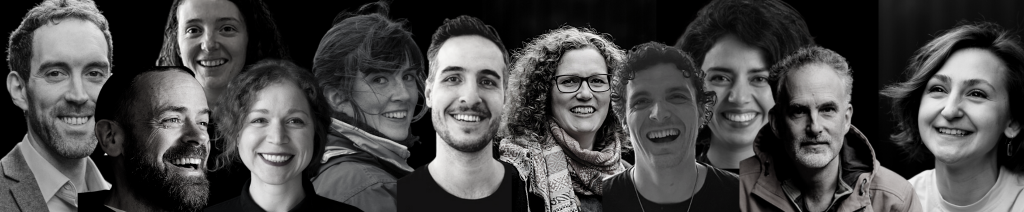
We recently took the time to record a season wrap up episode of our podcast, Working For Progress.
Reflecting on Working For Progress
Working For Progress was launched with the intention of clebrating our communities and sharing their individual journeys. We are lucky to have a community of creative people, all doing interesting work and who are also interested in the bigger picture. Their health, their communities, their impact on the world. It is important for us to connect through conversations about how we craft our working life and make progress. Each episode sees us ask our communities questions about their working life, the challenges they’ve faced and the progress they’ve made.
It was funny to think back to the initial awkward fears that producing and recording a podcast brings. We are forever grateful to our pals over at Glocast for allowing us to record our trailer episode with them. Perhaps without this as a date in the diary to record we would not now be reflecting on our eleven published episodes!
We spoke at length about what stood out to us in season one and we really wanted to thank our guests for their honesty and vulnerability. Even recording a conversation with people that you know in a place that you are familiar with can bring nerves. Not to mention that using a mic can initially feel very intimidating. It has been a joy to listen to the intricacies of people’s journeys and without creating the space to reflect there’s so much we may have never known! The podcast has made both myself and Dani feel ever more connected to you all. Taking the time to interview each person has served as a valuable reminder of how important connection and conversation is.
Dani reflects: “Each person brought their unique story to the conversation, a bit of where they have come from in terms of significant life moments which have impacted on what they are doing today. Thinking back, it was often a person or an interaction which profoundly impacted a decision or direction. Sometimes only with hindsight do you notice such influences.”
Working at the speed of trust
We also spoke about what we wanted out of the podcast. I really wanted to showcase all of the possibilities your working life can bring and highlight the turning points in people’s career journeys. For myself, I am very early doors. I have spent most of my working life in hospitality. I adore the world of hospitality but always desired something more stable without losing what I value. Before Tribe, I remember having this weird sensation that I was failing or doing things wrong and that I simply wanted more out of my working life.
Coming to Tribe gave me the term value based work. It’s a privilege to work alongside so many people where value is at the heart of their working lives. At points in my own journey, value based work felt out of reach and at times it just felt like ‘a nice idea’. I wanted this podcast to highlight how many different avenues and directions life could take you. Career journeys are not always a linear path like you are told at school. For me, each episode really encapsulates this as each guest highlighted the journey and risks that they have taken themselves.
It was interesting to note how the support of communities and the right people at the right time came up alot in each person’s journey. Alongside this came trust and putting yourself in the relationship of trust to find trust. These seem to be vital ingredients in both navigating working lives and in taking risks. Here’s what Nasim Forootan said about the importance of trust:
“It’s okay to trust and to open yourself up and be vulnerable sometimes with how you are feeling and what you’re seeing. Sometimes you need to have difficult conversations to explore the nuisance of things. Have faith that things will come out right. If you go into a situation with doubt, you won’t let yourself explore the relationship that could be. Trust is a really strong value for me. Trust is embedded in everything I do. When we work in organizations or when we look at community spaces and governments, it’s one element that is constantly broken. If we had a tiny bit more trust in each other the world would be a better place”-Nasim Forootan
The importance of community
Trust and honesty certainly became an overarching theme, both in trusting in yourself and the people around you. This is why coworking is so incredibly important. It’s not often in life you get to choose the people around you and people are such a strong and beautiful part of Tribe. Tribe is not just a desk to work from, it is the people that you’re sitting next to, have lunch with and stop for a tea break and a chat with. Coworking perfectly encapsulates the human need and want for both community and connection.
During our chat, Dani reflected: “Think of Brene Brown’s saying, ‘It’s hard to hate people when you see them up close and know their story’, it’s true. Bear with me, I am so far from hating anyone, especially this crew. But in a similar vein, the care and love I now have for each guest has expanded. To know them a bit more, to be trusted enough that they share themselves with us (and everyone who listens) is not taken lightly. We could easily brush it off, quite normal to be on a podcast and chat about your working life. But when people share their values, why they do what they do, what brings them a sense of belonging and awe, it connects us in generative ways.”
Bob Cummins of SODAK amply said during his interview that “Emotional safety is formed with people. If you’ve got others you can take the journey with, it makes risks easier”. We hope that in listening to each of these stories you may find more confidence in navigating your own journey and not to feel scared of taking the necessary risks. Founder of Good Life School, Lorna Lythgoe spoke of this in such a beautiful way whilst reflecting on her on career journey :
“I felt like I had leapt off a cliff, I was falling and would occasionally land on a shelf. It was painful and scary and uncomfortable, which sounds like I’m saying don’t do it. In retrospect, now I know that was the growth and the career path, I started to gleefully leap off as I understood It wasn’t an abyss”- Lorna Lythgoe
Keep working for progress
Most of all, our podcast makes us feel so very grateful for the communities of Tribe Porty and Keystone. We are so lucky to meet so many incredible people through these communities. It is an honour to share your stories. We want to keep showcasing you as the brilliant, incredible and completely normal people that you are. People who are real and care deeply about others and this planet. We hope that our little podcast helps you to stay surrounded by good people, keep true to your values and to keep working for progress. (Too cringe? Nah, we love it!). You can listen to all of our episodes, including our season wrap up by clicking here. Fancy joining myself and Dani in an episode? Drop us a line at: more@tribeporty.org
As always, thanks for reading. You can read all of our previous blogs by clicking here. Make sure you’re subscribed to our newsletters by filling out the form below:
Mailchimp signup form
Controlling Distractions
How distracted are you by your phone and is it worth your time?

A frequent conversation around the coworking table is the nuisance and distraction that technology, phones and social media brings. This stems from doom scrolling, to issues spurred on from social media and questions on how to ‘correctly’ parent technology. It’s a big multilayered problem and it seems the thread of desire is to find a way to detach. We want to remove ourselves from passive connection and stop being distracted by our phones.
Why have phones become such a distraction?
When we use our phones we are selling only our time, it’s often the moments where we want the time to pass that we fall into the trap. We are always wanting to be busy, we always want to be consuming, maybe it’s time to step back and let yourself be bored. Let yourself day dream and be alone with your thoughts.
“Solitude Deprivation. A state in which you spend close to zero time alone with your own thoughts and free from input from other minds.”― Cal Newport, Digital Minimalism: Choosing a Focused Life in a Noisy World
So what are the real problems we cause ourselves when we take to our phones for light entertainment or to pass some time? A study in 2007 by Dr Martin Hilbert and Dr Priscila Lopez found that the average person is drowned in 174 newspapers worth of information everyday, across TV, radio and reading. It’s easy to assume that this figure is even greater today. When you consider how much information we receive everytime we pick up our phones you soon realise why it’s so easy to be overwhelmed by the doom and gloom in the world. Or more likely, you feel yourself becoming ever more detached and unresponsive. We have no time to form any true compassion or understanding as we are always onto the next big news story.
Time to break from the distraction?
Gloria Mark, a professor of informatics, found that on average an adult working in an office stays on a singular task for no more than three minutes before switching tasks. We are tricked into thinking that we are great multitaskers, we are not- we are however very good at getting distracted and losing focus. Mark argues that especially during computer based work, instead of seeing a new tab, email reply or doom scroll as adding a new task, see it as adding a new distraction. This sounds easy but we have already programmed our brains to shift focus constantly, this is why we always are reaching for our phones.
After 14 years, I deleted my Twitter account and removed the app from my phone. This was spurred on by the change to X, in a weird way the visual change prompted discomfort but also made it easier to delete and let go, so thanks for that Elon! Since then, I notice myself whilst routinely checking Facebook and Instagram my thumb automatically going to tap the Twitter app. My brain is fully in a trance, it’s terrifying! Another thing I noticed, whenever I think of something funny my brain frames the thought as a tweet. It’s like an ingrained desire and need to tweet it, again…terrifying!
Make it worth your time
I feel like I do not need to delve into the problems around phones too much as we all experience it daily. I did consider counting how many times I picked up my phone whilst writing this piece but I feared it would be too shameful of a number. However, I do not believe that a complete detox, hiatus or banishment is the answer. Nor is blaming or shaming ourselves. I think it’s more important to consider the good things phones and tech can bring to our lives. Think of how much time has been saved through emails, online banking, google and life admin. We just need to be more aware and purposeful of how we use this tech.
For me, it’s the small impromptu moments of time where picking up my phone is becoming a problem. The automatic reflex to have a quick look always turns into at least ten minutes of scrolling. It is entirely passive consumption and is the definition of needless. I’m really good at misplacing my phone, something I’m weirdly proud of. It means that it’s not constantly on my mind or in my hand. Now when I lose track of it, instead of hunting it down straight away I purposefully question why I need to find it? What do I need it for? Unless the reason is valid, like calling my nan or if there’s a fire that needs tending to, I do not bother looking for it.
Find the balance
‘You want to read a book, but you are pulled away by the pings and paranoia of social media. You want to spend a few uninterrupted hours with your child, but you keep anxiously checking your work email. You want to set up a business, but your life dissolves into a blur of facebook posts that only make you feel envious and anxious. Through no fault of your own, there never seems to be enough stillness.’-Johann Hari, Stolen Focus
By detaching from our phones, time alone can become more nourishing, remove the need to compare and focus solely on ourselves. Instead of taking to social media for a ‘break’ try out some meditation, a little day dream, a quick stretch or a wee stroll around. Maybe what you’re craving is in fact a quick brain reset! Choose to feast on your own life, instead of small snippets of others. Rember, tech is designed to be addictive but we can choose to have a more purposeful relationship with it.
HERE ARE OUR COWORKERS THOUGHTS, TIPS AND TRICKS!
- APPS (the irony). A few of our members use apps such as: Niagra Launcher and Minimalist Phone
- Deleting social media accounts and using IRL or direct messages to connect
- Deleting apps that have no regular use or purpose
- Removing apps from my home screen so that I would need to search for them
- Creating time limits for usage
- Phone-free Sundays (it’s amazing how much time you gain!)
- Newsletters, I have become a big fan of newsletters. It’s a great way to consume meaningful and chosen content without the gateway to endlessly scroll.
- Keeping a ‘lookup list’ I take note of things that peak my interest. I can then I look up these in moments of boredom without falling down the rabbit hole. Example: What is Suminagashi? Do bumblebees hibernate in houses?
- Setting alarms which signal times to not use your phone
- Uninstalling the app and using web browser versions (just to make it less accessible)
- Educate yourself on how the apps and algorithms work, as they say ignorance is bliss. Once you learn the ins and outs of how they can manipulate your attention, you might second guess why you use them.
Don’t forget, habit is key and habits are harder to break than they are to form.
________________________________________________________________________________________
As always, we would love to hear your thoughts, keep in touch by signing up to our newsletter below! You can find our previous blog posts by clicking here.
Thanks for reading,
Alice.
Mailchimp signup form
Let’s talk about Menopause
“Around one in five women report experiencing health challenges relating to menstruation or menopause. Among the 15% of women who report experiencing health challenges related to menstruation, over 40% say they work through the pain and discomfort.”-Women at Work
If not now, when?
I am 26, I was not educated about menopause at school. I feel as though I was barely educated about periods at school. And here I am now, writing a blog post about menopause, some of you are thinking, ‘little young to be writing this’. But therein lies the problem. And whilst we’re talking directly, men, you should keep reading too. The only information I have been exposed to about menopause is through mainstream media. Even then, it is at most a joke about a character going through the change and experiencing hot flushes and dryness…
By not educating people from a younger age about menopause, it neglects the notion that it even happens. Like it’s make believe or that you will somehow naturally have the resources to hand when the time comes. I remember hitting puberty and my mum panic throwing books my way titled ‘have you started yet?’ and ‘girls only’. The illustrations on the covers would have teen girls whispering between themselves, this only reinforced the stigma of periods needing to be an uncomfortable secret, never to be spoken openly about.
Thankfully (hopefully?), we have come away from this. Which as I grow older I see growing importance in. By gendering menstruation and menopause we only gate-keep vital and important information and care from the LGBTQ+ community. It has taken a long time, and I am still in the process of understanding my ever changing menstrual cycle. Thankfully, I’ve always felt a strong attachment to understanding my body’s natural process and hormone fluctuation. I only started to meet and converse with others that felt this way in my twenties.
I guess the point I am trying to make is that if it has taken 13 years (that’s 156 cycles!) to get to grips with periods, I can only imagine the loss of control one would feel during perimenopause. When we think about menopause, we should think in terms of the time taken to complete the whole process, much like we do with puberty.
“The Change” unfortunately still generally remains a taboo subject, even amongst many women. That’s why we need to talk about it, to your mums, dads, brothers, sisters, children – anyone. And for those dealing with this, or about to, it’s so important to learn about it. Do your research and approach your GP armed with the facts and knowledge.”-Menopause Mandate
Finding yourself in Community.
The most powerful conversations I have had with friends and confidants have sparked from one person saying to the other an honest or uncomfortable truth. No matter the subject, be it partners, periods or mental health, a friend saying I’ve felt that or I’ve experienced that too can completely shift your mindset. You are no longer alone or alienated in your feelings and experiences. It’s in this scary sweet spot that experiences and knowledge can be shared.
This is also why menstrual health should not become a gendered conversation. How can we gain vital support from our partners and loved ones if they also have no clue or understanding over what’s going on? Being in touch with yourself, at all stages of life is a crucial ally to your wellbeing. Even when looking into the future is a scary prospect, understanding your body’s natural processes and forming a connection ultimately influences your comfort and welfare.
“A strong theme coming through from research on this issue is that perimenopausal symptoms ‘can be quite disruptive and distressing, particularly when women do not know why these things are happening to them in the first place’. If their partners do not know either, we have the seeds for an inauthentic challenge to even the most healthy of relationships.” -Richard Hull
When we can’t rely on governments and policies to support and educate us, this is when community and allyship becomes a necessity. With that in mind, we took to our community to ask questions about menopause, here’s what they had to say:
“When I think about menopause I feel old. I know so little about menopause I cannot answer the question of how we can improve workplaces to support those going through the menopause. I feel that education about menopause should happen at an early age, and we need to integrate healthy conversations into popular culture, to all sexes.”
“When I think about menopause I feel unprepared and in denial despite it being inevitable. We need to fully recognise that women’s normal health is very different from mens. In terms of changes that need to be made in the workplace, I have no idea where to start. I am not sure if I would have been open to being taught about menopause when still under the influence of teachers at school. That said, reproductive health education at school (in the 90’s) felt abstract and surface. For fertility and pregnancy there is no end of advice and information backed up from the NHS with information and appointments with health professionals, and even then there are still gaps. I am also not sure medicalising menopause or any aspect of a woman’s reproductive health is empowering. Being able to notice, examine and interpret the clues of one’s own body is probably the best. So how do we teach that? And if so, starting as young as possible is best… a useful tool for both sexes.”
“I have lots of feelings about menopause, but ultimately I am trying to rethink menopause like I tried to rethink birthing. It can be a wonderful thing yet mostly what we see are the horrors, the blood, the screaming women. What about the other side? The euphoria, the baby bliss, the overwhelming feeling of awe and love. So although I’m not there yet, I’m trying to think about the potential new wisdom that comes with menopause. The freedom to have some painless and bloodless months. The change in hormones that lead to changes in your body and mind. I’m not entertaining the old, dried up, wrinkled, useless characters of a postmenopausal woman. We need more awareness and research in the same way impotence is given. There is five times more research into erectile dysfunction, which affects 19% of men, than into premenstrual syndrome, which affects 90% of women. And menopause happens to 50% of the population and 100% of women! We also need more research to combat the Women’s Health Initiative Study confusion over HRT.”
Each month, we offer a free talk open to the public. Our next Tribe Talk will be delivered by Yellow Empress Acupuncture. Hannah will be offering an evening around self-care for perimenopause with holistic perspectives for a healthy transition. To find out more and to book your free space, click here.
As always, we would love to hear your thoughts, keep in touch by signing up to our newsletter below! You can find our previous blog posts by clicking here.
Thanks for reading,
Alice.
Mailchimp signup form
Pause & Reset
Covid-19 has shone the light on lots of cracks, many which have been there for a long time but somewhat covered up or perhaps time just makes them easier to ignore. Loneliness, health inequality, race inequality, food inequality, gender inequality, just to name a few. People who have been worst affected by the virus are generally those who had worse health outcomes before the pandemic. The scandal is not that the virus has disproportionately affected certain groups, but that it has taken a global pandemic to shine a light on deeply entrenched inequalities.
Before you slump further down in your seat, I am aware that we don’t need to pile on more fear and despair, so, at this moment how best can we take in the lessons and make real positive changes? If we don’t make a real shift, we will perpetuate a sense of helplessness at best and more of the same inequalities at worst. Our broken systems have been highlighted and the value of community has never been more obvious than right now. Holding our values higher and stronger than ever feels like one way forward.
So what does that look like for me? I sometimes worry I am a broken record, but every time I tackle a big question like this one and have an ah-ha moment, the answer is undoubtably simple; finding community. This is a unique opportunity to reshape our world views; one that puts people first. We have a chance to reflect on our choices and how they impact on others and the world. Current times could give people a chance to unleash creativity, which in turn could help lead us to live our best lives.
For now, I am going to take the moment to rethink and adapt the present to reshape our future. When thinking of this time as a fortuity, it feels less scary and more like building resilience.
I would love to hear your thoughts and how you have grown through this crisis.
by Dani Trudeau
 Top
Top