Playing With Creativity to Find Fun
Why should we add creative play into our lives to find fun?
“It is in playing and only in playing that an individual is able to be creative and to use their whole personality, and it is only in being creative that the individual discovers the self.”
― Donald Woods Winnicott, Playing and Reality
Creativity is unique to each individual, it encapsulates many different forms, processes and connections. Creativity and play can generate an important challenge; embracing fear and your inner critic. We lose interest in hobbies as we grow older, arguably this is as they need to hold a greater meaning than ‘just for fun’. Spending our precious time on something, anything, must produce a worthy outcome and once play is lost from our lives, it is difficult to regain.
A quick google search of the word ‘play’ will primarily show images of children playing, but it is just as important for adults to play too! The further removed we become from the idea of play, the more troubling the idea becomes. A purposeless activity becomes a concept that is impossible to grasp and often causes feelings of awkwardness. The average person has up to 60,000 thoughts a day and creative play has been shown to help focus the mind. Creative play and finding your flow can reduce anxiety, depression and stress. So why is it so alien to us?
Using Creative Play to find Flow
Flow is a state of mind achieved when you are fully engrossed in an activity. When you lose all sense of self and time, that’s flow. It’s been found that repetitive creative tasks can help you find your flow, tasks such as writing, knitting and drawing are great examples of this. Once you have achieved a state of flow, your brain becomes flooded with dopamine, the feel good chemical that helps to motivate you and ultimately will encourage you to repeat your chosen form of play.
“…It is when we act freely, for the sake of the action itself rather than for ulterior motives, that we learn to become more than what we were.”
― Mihaly Csikszentmihalyi, Flow: The Psychology of Happiness
Using Flow to encourage Play
Having fun with creative play is often seen as a nice idea, but we are at a loss as to where to start. For most people, it’s been so long since they last played, they have forgotten altogether how to do it. Whilst it is a nice idea, we are no longer sure what it means to play. In the words of Maya Angelou, creativity is a bottomless pit: ‘The more you use it, the more you have’. Creative play becomes even more important as we age and as our lives get busier. When embracing play, it is important to remember that the act of play must be deemed as being more important than any form of outcome. Most of all, creative play should bring you joy, you should engage in play to immerse yourself in a moment to moment experience.
“Life without play is a grinding, mechanical existence organized around doing the things necessary for survival.Play is the vital essence of life. It is what makes life lively.”
― Stuart Brown, Play
Growing Down to find Fun!
Often, we recognise that people benefit from free spirited play such as dancing, scribbling or writing but cannot see the point in engaging in it ourselves. Art in any form wears a veil of elitist mysticism. If you view yourself as an ‘outsider’ to the culture, it becomes even more difficult to engage with it. Instinctively, we lean into these feelings of imposter syndrome by becoming more concerned with the physical outcome than the positive internal feelings the act brings us. Creative play is not about making great art, or a great piece of writing, it’s about finding your flow and happiness.
I think sometimes we need to grow down, free ourselves from the constraints of what it means to be an adult. Let yourself indulge in silly fun and stop thinking about what is and isn’t possible. Be in the moment, open your mind, find your flow and remember, the act is more important than the outcome.
Need Some Inspiration?
- 100 day challenge
- Attend a local Workshop or a Class to help with inspiration and motivation. (The first time is always the hardest)
- Take 20 minutes of each day to play, this could be through free writing, doodling or playing a game.
- Move your body, pop on some tunes and have a mid-afternoon boogie. Don’t be shy!
- Most importantly, decide what fun means to you and make the time for it.
Share your thoughts and keep in touch by signing up to our newsletter below!
Thanks for reading,
Alice.
Mailchimp signup form
Kindling Resolutions
As we come into a new year, it is a natural time to reflect and look ahead. Have you thought about what makes a good resolution?
When considering a new resolution, an idea that is often overlooked is to rekindle something that has previously bought joy. Often a resolution involves taking something away, be it a guilty pleasure or bad habit. I would argue that a good resolution should instead breathe positivity.
It is important to balance thoughts between what has already passed and what to consider next. The pressures of New Year’s Resolutions can sometimes cause unruly thoughts, leading some of us to opt-out. Why panic into setting a resolution you do not feel attached to. A successful resolution must be considered and nurtured. A new year does not have to mean a new you.
‘There is no new world that you make without the old world.’-Jane Jacobs
Perhaps we should take more time to consider the joys of the past and how we can rekindle them. During my childhood, I spent many hours in a small cramped shed full of crafting materials, paints, fabrics, a real treasure trove! Consequently, art was always my favourite subject at school. I was fortunate enough to continue this into my adolescence by attending art school. Despite being blessed with a wealth of creative space for the majority of my life, I’ve noticed it fade away. I no longer attend any form of art class, I rarely pick up a camera and the only time I bring myself to draw something is to make a birthday or christmas card. It’s a joy that I no longer make the time to nurture and explore.
‘Mankind now possesses for the first time the tools and knowledge to create whatever kind of world they want’ – Robert D. Putnam
It’s easy to throw excuses of time, space & money. To be honest the route cause for me is the distraction of life. I very recently had several rolls of film developed, an accidental archive of the past five years of my life. It was melancholic to see the physicalities of time causing a love to fade. The intervals of time widened between each photograph.
Self care is all about making time for these loves and it would be valuable for us to all set a resolution in a similar fashion. Take the time to think of practical ways you can re-embody old hobbies, crafts and joys.
Here at Tribe Porty, we strive to create a space where you can achieve these goals. Achieving your goal is unique to yourself. It can be as small as making a public declaration of what you would like to rekindle. Maybe it’s forming a circle of friends at Tribe to gather and participate in a shared activity. It could even be joining a local club or spending ten minutes a day working on some yoga poses.
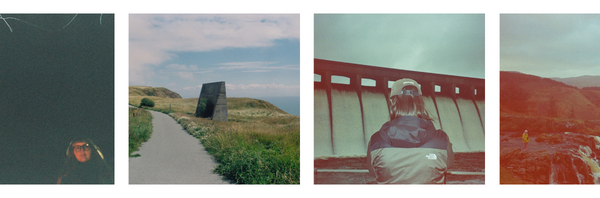
Here are the resolutions we are going to nurture and how we plan to rekindle what brings us joy.
Alice:
ART! Art for myself, with no intention of publishing work, sharing or selling. Making art completely for myself. I’ve always loved collage and I have always naturally drawn to it, collecting and making materials and curating them together. To rekindle this love, I would like to host an Art Club at Tribe, an open space where we can come together, laugh, chat and create.
Hannah:
Often my New Year resolutions default to restarting that thing I used to enjoy, making time for it, re-joining the class. And often they fizzle out in the first month. What was once a habit nurtured by the circumstance of the time, now, no longer fits so neatly in the evolving balance of work, family and friends. I still yearn to reconnect with these lost loves but more care and consideration is needed to imagine how they might be supported in today’s version of my life.
In 2022 my creative practice of 14 years officially dissolved with the end of being self employed. One obvious rekindling would be to find time and space for creative play for myself. Sewing in particular. My daughter asked just the other day ‘Mummy, when will you sew again?’. My reply was when I can make space for the sewing machine and cutting table. This is a big dream and one that fits into the longer days of summer, or at least once I have cleared the post Christmas detritus.
But thinking about my environment now, there is space, so long as I say “yes, let’s do that now” rather than “perhaps tomorrow when there is more time” to the requests of my children to get out the new modeling clay or paint or pompom maker. I too can sit at the table and join in. At first it may be Fimo charms, but with repetition a habit may form, the environment will subtly shift to support those yes’s being a bit easier to say, those trousers might get made.
What about you?
Jumping from this text, what do YOU want to rekindle this year? Share it with us and we will check in with you in a couple of months…Not sure where to start? Try out some of the free workbooks provided by our partners Keystone Women. Click here to download helpful materials to help you reflect, take stock, relax and plan.
Share your thoughts and keep in touch by signing up to our newsletter below!
Thanks for reading,
Alice.
Mailchimp signup form
Conscious Christmas
Last week I vocalized my first gripe over Christmas gift buying. It was a blustery day and I told myself after work I would venture out to the dangers of Princes Street to hunt for gifts and finally start checking people off the list. My friend’s response was not what I expected, “oh I stopped doing that years ago”…I had to ask for clarification, “yeah just one year, enough was enough and I explained to friends and family I would no longer buy Christmas gifts”. Is it possible to find a balance and not over consume during the Christmas period, does a conscious Christmas exist?
Manufactured Desires
I’ve never felt quite so jealous of someone else’s relief from such a trivial conundrum. I don’t think I ever considered the fact that you could just…stop. It made me question why we do it to ourselves? Perhaps it’s like everything in life, the virus of capitalism has leached onto everything. Instead of being content with giving one thoughtful gift we are plagued by thoughts of ‘I didn’t spend enough’, ‘it should be more than one gift’, ‘what if they spent more than me’, ‘what if they think I don’t care’. None of these thoughts are very Christmassy and at the heart of it, your loved ones would never think such things of you.
“It is another of consumerism’s ironies that, although it functions like a mental trap, we often think of it as an escape.” ― J.B. MacKinnon, The Day the World Stops Shopping: How Ending Consumerism Saves the Environment and Ourselves
Over Consuming Christmas
Personally, I don’t think I could take quite a drastic leap, and whilst I wouldn’t label my friend a Bah Humbug, I simply love Christmas too much to not gift give. However, I find myself extremely frustrated over the wasteful and excessive way we consume Christmas and we should definitely become more conscious over the Christmas period. Consumerism and the environment go hand in hand, the more we consume, the more we produce, the more we waste. It’s times of the year, like Christmas, where we should definitely be consuming differently, and not as much.
We’ve all had our fair share of Christmas presents where their only purpose was to generate, at best, a 30 second laugh. They then spend the rest of their life in a junk drawer, or collecting dust on a shelf only to end up in the bin or at a charity shop. I see gift sets from chain retailers in the same light. Ultimately, you are paying for Christmas themed packaging which again…goes in the bin!
So how do we all take steps to reduce wasteful consumption? Gag gifts can be a hoot, but can be sourced responsibly via charity shops or even ebay. No, your friend with a leaky gas pipe does not need a fart button. At all costs, avoid the boring, and frankly sexist, gifts for him or gifts for her sections. There’s a reason these types of gifts and gift sets dramatically fall in price post Christmas (it’s because no one wants them).
Money, Money, Money!
British shoppers are expected to spend £4.4bn less on non-essentials – a fall of 22%.
Without ignoring the elephant in the room, we are of course in the midst of a cost of living crisis. If unanimously we are spending less on Christmas, how can we also allow our money to have a greater impact on our local economy. Easy, spend it locally. And when I say locally I don’t mean Fort Kinnard because it’s down the road. Turn to our independent traders, local shops! Treat our friends and family to smaller gift parcels full of delights. Ultimately, these traders may not make it without our support. You may already be thinking about how these shops are too expensive, but again, perhaps we need to adjust our expectations for gifts. Quality over quantity!
Yes you may be able to get more ‘bang for your buck’ by buying gifts from chain retailers, but think of how much further your money goes when supporting a local business. Not only does your lucky receiver gain a beautiful, thoughtful gift, but you actively supported our local economy. Without sounding ungrateful, I find nothing more frustrating than receiving a gift that I know I won’t use. I’m sure we can all agree that one thoughtful gift is far more wonderful to receive than a big pile of consumer goods that are eventually forgotten about.
Do It Yourself.
There is always the calling that a DIY christmas is the way to go. Undoubtedly, with energy costs on the rise, a vat of homemade chutney may no longer be the answer we’re looking for. We can definitely be a lot craftier in our quest for gifts. Perhaps we also should stop frowning upon the idea of second hand gifts…When it comes down to it, what are the real differences between a charity shop book, and a new book? Or a toy? A scarf? I’d argue that the only difference is our disdain towards giving something that has had a previous life.
In reality, imagine the cost of purchasing a variety of toys, books and games for a child and simply rejuvenating it with thoughtful and crafty wrapping? Who doesn’t love a hamper?! There’s no reason the hamper couldn’t be made up of second hand buys… You can find some more ideas for this here.
“Under capital’s growth imperative, there is no horizon – no future point at which economists and politicians say we will have enough money or enough stuff. There is no end, in the double sense of the term: no maturity and no purpose.”Jason Hickel, Less is More: How Degrowth Will Save the World
I don’t believe there is a right or wrong way around these conundrums. Christmas gift shopping is already hard enough without jumping through extra hoops. Society screams at us to be more eco-conscious, to save local businesses and still please our loved ones. Nevertheless, we should consider what our favorite gifts have been. How and why did they spark joy or find purpose in your life? Consider the journey the gift will go on after it has been received. By applying a few of these thoughts to our gift giving this year, we will ultimately have a more conscious christmas!
A practical guide, things to remember whilst Christmas Shopping:
Quality over quantity.
Reuse, recycle, do not fear second hand and charity shops.
Dedicate some time to look around independent shops.
Want to support some Tribe Members? Check out our Christmas Newsletter which features a gift guide full of ideas and gift cards.
Share your thoughts and keep in touch by signing up to our newsletter below!
Thanks for reading,
Alice.
Mailchimp signup form
Curating Habits
It’s all too easy to reflect on time past as lost or wasted, the consequence of losing time only becomes apparent during moments of guilt based contemplation. Guilt causes us to value lost time to a higher level than the time we still have ahead of us. But perhaps this perpetual way of thinking is too caught up in regret and therefore we continue to waste time rather than build sustainable change to obtain our desires and goals. It’s easier to overestimate the power of the past and therefore underestimate the value of small changes and habits to daily life.
I had not considered the power of small habits until recently, this realisation came from an enormous change in the routine of my work life. I had spent the majority of my adult working life sacrificing a minimum of 40 hours a week to a physically and mentally challenging job. On top of that, I received my rota a week at a time, usually a day or two before the week started. The notion of habit and routine was impossible for me to obtain due to these constraints. The impact a lack of routine had on my physical and mental wellbeing was not unnoticed…definitely suppressed. When I think back to this lifestyle a quote from Bruce Tift rings true: “we don’t have to consciously participate in what it’s like to feel claustrophobic, imprisoned, powerless, and constrained by reality.” I felt as though I was down a rabbit hole with no idea how to get out. I needed more good days.
Personal time became a sparse luxury, when not at work I either needed to clean my flat, do laundry (AGAIN), or simply turn my body off and enter the abyss that is reality television. It wasn’t living, it wasn’t even surviving, it was simply existing. After having a sad and almost existential realisation that my work was the root cause of my unhappiness, changing my job became a necessity. Fast forward a year and two jobs later I finally found myself in a job that gave me TIME! Beautiful time! What did I do with this time?! I watched more TELLY! I mean…c’mon it was well earnt and a new series of Euphoria was calling my name. This didn’t last too long as I was well aware that this time could be better spent. Having said that, it’s just as important to know when to hibernate and recuperate.
“We often seem to dismiss small changes because they don’t seem to matter very much in the moment.” -James Clear: Atomic Habits.
The first small change that I made in an attempt to improve my wellbeing was to go to the gym. When I say I hated it, I really mean it. I hated the smell, the music, the sound and the look of the machines. Everything was monochrome and industrial. However, it became an important first step towards my ultimate goal. I wanted to become a runner. I knew I would never have the confidence to run in public without an improvement in my fitness levels. Even once I made it out of the gym and into the great outdoors, I kept running a well guarded secret. I wanted to protect my desire to run as far away as possible from the stigma of weight loss, this was not my goal and not my intention. I feared that outside opinions would push this unwanted pressure onto me and the public declaration of being a runner would skew my own vision.
Why am I running? Metaphorically form the patriarchy, in reality for myself! Overestimating the importance of a defining moment is easy, it’s even more important to value small improvements that you create daily. Success and achieving a goal does not require massive action. For me, the reason I run isn’t to run a marathon, it’s to have time to myself, to listen to music, to be outdoors and see the seasons change…
Routine aided in me identifying as a runner, now I can’t imagine not doing it and i’m certainly no longer scared to say that I do it. James Clear prompts the celbration of identity as it is a form of intrinsic motivation, “It’s one thing to say I’m the type of person who wants this. It’s something very different to say I’m the type of person who is this.” Schedule the time and show up for yourself, routine will form confidence in your actions and they will therefore become sustainable and with time, unconscious.
I felt that it was important to tell this story as it points out some fundamental things that first must happen in order to engage in positive lifestyle changes and become your ‘best self’. First, is your environment. This is both your home life and work life and acknowledging that a balance is needed. The second is motivating habitual practices in order to achieve a positive change.
“Your goal becomes your compass, not your buried treasure. The goal is your direction, not your destination. The goal is a mission that you are on, a path that you follow. Whatever comes from that path—whatever treasure you happen to find along this journey—well, that’s just fine. It is the commitment to walking the path that matters.” –James Clear: Atomic Habits.
When you identify a change you want to make in your life, or set a new goal the most important part is to make it a manageable change. If you set a goal that is too impossible to reach, it is unlikely that you will achieve it. Instead manage ambitions into smaller goals, this will enable you to change habits and generate sustainable progression. An unattainable goal will cause you to fall possibly at the first hurdle and therefore instantly lose motivation. Your habits must also align with your environment, looking back now I would not have made positive and sustainable changes in my life without changing my working life.
It’s difficult to appreciate small changes and the creation of small habits because they do not matter in the moment. We’re all guilty of comparing ourselves to those who are already where we want to get to. It doesn’t matter how unsuccessful or good you are right now, the thing that matters is curating the time, environment and nurturing the habits. Once you’ve consciously made these decisions (and ofcourse stick to them), everything else falls into place.
Curating your environment will expose many practical changes that ultimately lead to good habits and rituals. For example, I’m personally guilty of leaving my phone to charge on top of my ever growing pile of unread books. It’s as easy as charging my phone in a different room, by removing the distraction of a phone (and silly animal videos), maybe…just maybe, those books will get read!
“Making a better decision is easy and natural when the cues for good habits are right in front of you […] be the designer of your world, and not merely the consumer of it.” -James Clear: Atomic Habits.
As we come into colder and darker months, it becomes even more important to consciously establish positive habits. Maybe it’s just as much about understanding the deep route of why you want to do something, or embody something? What does it bring to your life? I think without at least a curiosity to understand why, perhaps it won’t bring you the redemption you want it to. Is there a change in your lifestyle that you want to make? Ask yourself how you can create meaningful habits to build and shape your world. Write it down, break it down, enjoy the process of change and have more good days!
“[Life] is a dance, and when you are dancing, you are not intent on getting somewhere. The meaning and purpose of dancing is the dance.”- Oliver Burkeman:The Antidote.
Share your thoughts and keep in touch by signing up to our newsletter below!
Thanks for reading,
Alice.
Mailchimp signup form
The Anti-Blogger
Why I didn’t write a Blog post for so long.
When I first started at Tribe Porty and Dani asked for me to start writing blog posts for the newsletter I was excited. I’ve always loved to write despite finding grammar and spelling challenging during my school years. I found these years tough as I was made to feel ashamed of my mistakes. It wasn’t until university that my self confidence grew in my writing abilities, it no longer felt like a struggle to impress my tutors and I took great pride and joy in writing about my subject matter. Post-Uni I fell off the writing train (amongst other trains), I struggled to find a reason or an intention to write. I feared becoming the cliche friend with a blog that nobody read, yet deep down the desire was there. When friends and colleagues who are studying complain about word counts and deadlines, I often catch myself saying ‘you’ll miss it when it’s not there’ like some bitter old man…
The first few pieces I wrote for Tribe I threw myself into it, there was no fear of the audience, I wasn’t second guessing myself, I was simply happy to have a reason to write. It was the type of joy that causes you to phone your mum to say ‘HEY MUM, I’M USING MY DEGREE AT WORK…I TOLD YOU A FINE ART AND ART HISTORY DEGREE WOULDN’T BE A TOTAL WASTE’. It was a buzz.
I think I made it to three blog posts before the self doubt came rolling in. I found myself questioning my own need, desire and intention for writing. On reflection, I noticed that these thoughts stemmed from me overthinking who would be my reader and what their responses would be. Who cares what I have to say about my very wholesome but mundane life? My troubles are (thankfully) very vanilla, no complaints there… I love vanilla! But what do I have to say that hasn’t been said before? Or said better? Or said to a bigger audience? Here I was, finding more reasons to not write than to write. I very quickly shut the door on writing blog posts and quietly hoped that Dani would simply not notice…
“When that impostery feeling comes up, treat it not as a sign to shrink and self-reject, but as an opportunity to play with expectations and enjoy your outrageous luck.” -Poppy O’Neil, Writer’s HQ
Already you can see where my brain went wrong: I thought more about other people than myself. Write for yourself, no one else. It’s the only way you can build authenticity, intent and consistency in your writing style. Publishing writing is scary, no matter the subject or size of the audience. Writing, like all art forms, opens up a direct window into your life and thought processes. As a reader, we read, to learn, discover and feel. When I think about the type of writing I’m drawn to there are always common themes of a brash humour and the ability to give everything away (even the ugly bits). The book I’m currently reading is Meaty, a series of blog posts by Samanth Irby. The most memorable part for me so far was an account of making an Instagram worthy Frittata out of the scraps left in the fridge. You can’t get more mundane than that (maybe butter on toast but that wouldn’t be a very long passage). So why do I in turn invalidate my own writing by convincing myself my boring stories aren’t funny, gripping or interesting.
“I feel like I’ve accomplished a lot. So I usually take a break, which often involves admiring my beautiful pile of uniformly cut vegetables while drinking coffee and wondering whether this will actually be worth it in the end”. -Samantha Irby, Meaty
So what’s the resolution? The quick fix? The gaffer tape holding back the self doubt and imposter syndrome? I think it’s to just…you know…write! A quick fix doesn’t exist, you must simply just write! I am thereby going to make a public declaration (how fancy). Once a week I am going to write freely, no pressure, no word count, just one piece of writing about absolutely anything. A weekly journal if you will. Not only will this help build an informal body of text that might spur on a blog post, or longer piece, it will help develop my writing, my confidence and with time remove the fear of the dreaded writer’s block. I invite you to join me on this quest, perhaps we can share this writing, or our thoughts over time during social lunch!
Maybe this is something you already do, and you need something that packs a bit more punch? Writers’ HQ are back with in person writing retreats. They are here once a month in Tribe Porty for procrastinating busting one day workshops. Find out when the next one is by clicking here.
Share your thoughts and keep in touch by signing up to our newsletter below!
Thanks for reading,
Alice.
Mailchimp signup form
Tribe Talks-Peter Jones
Craigmillar & Niddrie, A book of Paintings.
Peter Jones is one of our resident artists at Tribe Porty. The abiding theme in his work is buildings, he is drawn to the stories they tell and the people they represent. Peter has already published a series of books that focus around Kirkcudbright, Portobello and Falkland. Whilst trying to establish a place to centre the next book around, the thought came to mind, why not a Craigmillar book of paintings?
Craigmillar is not an obvious choice when Edinburgh is renowned for it’s beautiful tourist hotspots like Stockbridge and The Old Town. However, these places have long had their stories told and celebrated, this next book was about not making the obvious choice. Craigmillar is one of many hubs surrounding Edinburgh that can be looked down upon and this project aims to celebrate a place that is often overlooked.
Peter also works with Inspiring Scotland, a national charity and funder of charities which seeks to support those affected by poverty and those that are at a disadvantage. One of its funding programmes is Link Up, which has a core belief that,
“…the ingredients for lasting change already lie in our communities in the shape of the passion, strengths, skills, knowledge and interests of local people, and when people are connected and energised, radical change can and does happen.”- Inspiring Scotland
The spark of an idea to focus a new book on Craigmillar coincided with covid and the first lockdown and changed the pathway for the project. It gave another local community in Gallatown supported by Link Up not just the desire but the need for a painting group. Funded by Link Up and facilitated by Peter, free watercolour starter packs were sent out to people in Gallatown. The Gallatown Watercolour Group had continued support from Peter with weekly painting tips and a facebook group for sharing and discussing. This led to the beginning of Craigmillar Art Group. Over time, and another lockdown, this developed into zoom sessions with discussions on artists and remote drawing sessions in both communities.
As the restrictions of the pandemic eased, the Craigmillar Art Group started to meet together for a series of outdoor workshops entitled ‘A Breath of Fresh Air’ which were supported by Link Up and Connecting Craigmillar. These took place in Magdalene Community Garden, Portobello Community Garden on the prom and Craigmillar Castle Park.
Due to the circumstances of the pandemic, not only was a community of artists connected but the beauty of the everyday and what we have on our doorstep was celebrated. A common occurrence that happened during lockdowns was that people noticed small and local interests that were once overlooked. Instead of being ignored, we found a way to celebrate and appreciate them. This is where Peter’s two worlds coincided and the two projects became organically intertwined.
From these events, Peter’s next book became a collective project and will host not only his own work, but work from the Craigmillar Art Group. The book will feature drawings and paintings of local buildings nominated by residents and has received funding from Creative Scotland.
If you would like to pick up your sketchbook and get involved with this growing community, you can join the on location workshops happening in May/June. The book launch will take place at Craigmillar & Niddrie Arts Festival in August and you can find Peter’s work at Art Walk Porty this September.
Thanks for reading and we hope to see you at our next Tribe Talks hosted by Ori Halup on June 30th. This Tribe Talks is an evening all about coffee. We will be talking about coffee sourcing, processing, roasting and brewing methods and of course tasting a large range of coffees. Ori will aim to help you understand better what it is that influences the flavour of coffee you drink all the way from farm to cup while talking a bit about how the sourcing works. From fair-trade to direct trade and everything in between.
To keep in touch, sign up to our newsletter bellow:
Mailchimp signup form
My First Month at Tribe Porty
It seems poignant to follow on from Dani’s last post, The Next step, with my own reflection on my first month at Tribe Porty. This piece of writing became a great opportunity for me to reflect, consider and grow. Starting a new job always comes with a rough terrain of anxieties and worries, especially when you are venturing into new territory. I’ve spent my work life since leaving university dedicated to the hospitality industry. For me, my next big move in hospitality would be to own my own cafe and I was starting to feel the constraints that working in such an industry can have. The Community Manager post felt like it was made for me, this is the only time I’ve felt this way about an opportunity outside of hospitality. It was my next step.
I came into Tribe quietly confident, ready for the challenge. The one thing that I didn’t expect was to find it difficult to engage with people and I felt my confidence stray. I became timid not out of fear, but because it can be difficult to integrate into a community that is already established. Established in the sense of community, but also connecting with people that are distinguished professionally. Here I am, starting anew, amongst all these amazing talents, thinkers and creators and I struggled to see where I fit as a piece of the puzzle. I knew deep down I was more than capable, but I needed to unearth my dormant talents. When I found myself feeling lost or out of depth, I caught myself finding comfort in wiping down tables and cleaning up the kitchen after a little lunch rush. Eventually, I found that this only fuelled the vicious fire that is imposter syndrome. Was I meant to stay in hospitality? I missed the comfort blanket of experience.
However, as I chatted to you all more, and with the support of Dani, I’ve really started to find my feet. My confidence only grows stronger as I settle into the role and become more self-assured in my abilities. It’s been fantastic to awaken my inner writer and artist which has been in hibernation since graduation. I sense that my confidence will really flourish as I take on more projects and see them sprout from a tiny idea to a fully fledged event or gathering.
One of my favourite parts about working for Tribe Porty is how it has changed my work life balance and encouraged a far more nurturing culture. Every morning when I ride my bike in, instead of battling up Easter Road, swerving past vans and buses, I now have the immense pleasure of a gentle cruise along the promenade. In addition, the shift from ‘working late’ to make up a few extra pennies to taking part in meditation classes or gaining a new wealth of knowledge from a Tribe Talk feels like an enormous blessing. It’s so important for your work to work for you, something I feel a lot of people realised during the pandemic and are slowly starting to forget.
Spring feels like a fitting time of the year to have a change in life, not only is it a change of season, but a season in which nature is rebirthed, grows and thrives. I recall a benefit that I found from Lockdown and the world stopping was being able to notice the change in season. The shift from winter to spring felt longer, it felt as though one had time to enjoy it. So whilst I have been caught up in self doubt and anxiety, I am going to remind myself to embrace the change and see it instead as an opportunity to grow. I’m excited to continue this journey with you all and I can’t wait to see where this next step takes me.
If you are looking for a better working life and grow your business with like-minded women, the programme is for you. To get a better idea of Keystone, we have a free check-in checklist and ways to rest worksheet download. The checklist and worksheet are aimed to identify and strengthen your access to your own resources, strengths and vision. Taking rest and creating rituals with intention, will help bring meaning and joy to your daily life. Keystone is open for signups in September, to keep in the loop, sign up to their newsletter.
Thank you for reading, to keep in touch, sign up to our newsletter below.
Alice
Mailchimp signup form
The Next Step
All you need to know is the next step
There is information for you if you are attuned to listening to it. You might not know where you want to go and that is okay. Let go of where you think you should be and just figure out the next step.
Instead of trying to figure the big moves, just think what is the next thing you need to do?
Where your attention goes, your life goes. A slightly different take on James Redfield’s quote, ‘Where Attention goes Energy flows; Where Intention goes Energy flows’. Nonetheless, putting your attention in the right place (you) is an important part in being well in this world and with others. Looking in does have its challenges and cultivating healthy strategies for introspection and growth are key.
If your work or creative practice requires extensive amounts of working solo or navigating decisions on your own, it can be all too easy to get stuck in your own head. Madeleine Dore from Extraordinary Routines also reminds us that rest is also a choice,
“IT’S OKAY TO TAKE A BREAK INSTEAD OF A STEP. Sometimes, it can be beneficial to take no steps at all.”
One way to help you take the next step can be through writing. From to do lists, blogs and books; writing helps make sense of things.
Write It Down
Here are my top 10 reasons you should write.
- Writing is an Essential Communication Skill- If you don’t write, you probably find it more difficult to communicate verbally.
- Helps You Think Through Problems- And you can do this alone and anytime.
- You’re More Likely to Achieve Written Goals- According to research from the Dominican University in California, “You are 42 percent more likely to achieve your goals if you write them down.”
- Journaling Benefits Mental Health- you can create a ritual around this time for yourself.
- Supports accountability- Writing your goals down not only forces you to get clear on what, exactly, it is that you want to accomplish, but doing so plays a part in motivating you to complete the tasks necessary for your success.
- Gets Your To-Do List Out of Your Head- A good first step to actually getting things done.
- Writing Can Help Form Bonds with Others
- Writing Makes You a Better Reader
- Writing is Fun- Writing can be fun in lots of different ways: thinking of the right way to phrase a sentence, for example, or coming up with a clever metaphor.
- No One Else Can Write Like You
Looking In, Looking Out and Looking Up
A regular writing practice has helped me to distil and crystallise my thoughts on many topics. I have been able to find a voice that represents my values and putting it out there no longer scares me. After all, you can choose to read it or not and sharing becomes less of a big deal the more you do it. Writing helps me to look in while looking out. In many ways the work of looking inward supports how I show up in all areas of my life. How can I remain open, willing and attuned? I repeat this question often when navigating my own healing and looking after my businesses. There is something inside of me that always knows the truth when I take the time to listen in and work through the uncomfortable unknowing. When the world feels exactly right where it needs to be, I know I have tapped into my truth.
“If you follow the classical pattern, you are understanding the routine, the tradition… you are not understanding yourself.”
– Bruce Lee
And for looking up, by definition it means to become better. I am always up for that, plus the view is always great when you do.
As always, I love to hear your thoughts, please get in touch. You can also sign up to our newsletter below.
Dani
Mailchimp signup form
Finding flow in 2022
Wait, what year is it?
I think we are all feeling the strangeness of 2021. I accidentally wrote an email out to everyone at Tribe saying we should say good bye to 2020. Many of us are saying last year doesn’t count, but it does. And most likely in ways we don’t yet understand.
We have somewhat transitioned out of the high alert state and into life with normalised constant threat and high potential of change. Life with both feelings of normalised loss and at the same time, new levels of appreciation of things that used to be taken for granted. The constant stress of playing out the worst case scenarios is exhausting. With burnout hovering over or perhaps already landed for you, this year has been full and dull.
According to Adam Grant,
“We just felt somewhat joyless and aimless. It turns out there’s a name for that: languishing. Languishing is a sense of stagnation and emptiness. It feels as if you’re muddling through your days, looking at your life through a foggy windshield. And it might be the dominant emotion of 2021.
Psychologists find that one of the best strategies for managing emotions is to name them. Last spring, during the acute anguish of the pandemic, the most viral post in the history of Harvard Business Reviewwas an article describing our collective discomfort as grief. Along with the loss of loved ones, we were mourning the loss of normalcy.”
Simultaneously, I have had countless conversations with people expressing how they have found new levels of awareness and a better pace for life since Covid. Usually that is quickly followed up with how bad they feel about saying that when they know many people have suffered so greatly. I have caught myself saying that too. I liken this to hitting rock bottom and the perspective that gives you- the only way is up.
What can we do about it? What to seek in 2022.
I purpose going against the cultural norm of numbing and leaning into meaningful acts. Adam describes this as flow- that elusive state of absorption in a meaningful challenge or a momentary bond, where your sense of time, place and self melts away. Grant goes on to site a study of flow;
“During the early days of the pandemic, the best predictor of well-being wasn’t optimism or mindfulness — it was flow. People who became more immersed in their projects managed to avoid languishing and maintained their prepandemic happiness.”
Finding flow is becoming increasingly more challenging. We have a million things pulling at our attention all of the time. It takes a huge amount of discipline to stay focused. But a distracted mind is the enemy of flow.
I have noticed that when I am feeling a bit low, I check my emails more often and I scroll through my social channels in a mindless way. Now when I catch myself in this state, I take a moment to try and think about what is really bothering me. Sometimes it is easy to figure out, sometimes, all I can do is change my habits. I notice that behaviour now and stop. I find something more focused to do- even if that thing is to sit and do 4 mindful breaths. I disrupts the bad habit, one tiny task at a time.
One characteristic of flow is the act of complete concentration on one task.
This can come in many forms and probably why I crave playing cards or board games from time to time. They create a contained task that my mind can concentrate on. No need to think about the ever growing to do list or what I forgot to do or what I need to think about putting on my to do list. Although finding an effortless state and flow are different, it is a good place to start.
More about FLOW
Csikszentmihalyi describes eight characteristics of flow:
- Complete concentration on the task;
- Clarity of goals and reward in mind and immediate feedback;
- Transformation of time (speeding up/slowing down);
- The experience is intrinsically rewarding;
- Effortlessness and ease;
- There is a balance between challenge and skills;
- Actions and awareness are merged, losing self-conscious rumination;
- There is a feeling of control over the task.
Flow state is losing yourself in the moment; when you find your abilities are well matched to an activity, the world around you quietens and you may find yourself achieving things you only dreamt to be possible.
To me that sounds worth the effort and at least one way of approaching 2022; an antidote to some of 2021’s languishing.
Embracing Change
An invitation to make the community what you want
We have quite a few new people at Tribe and our first social gathering (outside) this week. And it feels good. But it is different then it used to be so in some ways I feel like we are starting over but I guess that is change. So how do we embrace change that builds resilience? When change makes us better, it’s because we have learned how to turn a challenging situation to our own advantage, not merely because change happens.
BBC’s, The Collection, Why embracing change is the key to a good life, writes;
How we handle change is the essence of our existence and the key to happiness, particularly in our current times of uncertainty. Since humankind has existed, many great artists, writers and philosophers have grappled with the notion of change, and our impulse to resist it. “Something in us wishes to remain a child… to reject everything strange,” wrote the 20th-Century psychologist and author Carl Jung in The Stages of Life. For these thinkers, a refusal to embrace change as a necessary and normal part of life will lead to problems, pain and disappointment. If we accept that everything is constantly changing and fleeting, they say, things run altogether more smoothly.
We all know cognitively that change is nothing new and inevitable. Yet, by nature, change feels unfamiliar so we often try to resist or desperately try and make sense of it. Pain is often the agent of change, which is why we fear it. It is hard to see beyond the pain to the opportunity of anew – but that is the only good choice. The alternative is resisting change, a futile and ultimately more painful option. Not to mention missing all of the opportunities for growth. Change takes practice and the more you accept it, the better you get at it. So in theory, we should all be a bit more practiced right about now.
“All that you touch you Change. All that you Change changes you. The only lasting truth is Change.” – Octavia E Butler
Change can be an engine of progress
Today we had our first social gathering since before the first lockdown. It was so nice. Everyone missed that community feel of our coworking space. In some ways we felt more united, all having experienced our own disconnection and struggles over the past 17 months. I would like to think that a show of solidarity and support in different communities has emerged; perhaps even a broader sense of equality and empathy. Now is the time to reflect and find the opportunities from change. Let’s not go back to being disconnected, isolated and self interested. I am hopeful that we can find a deeper understanding of our humanity, discover new priorities and be driven by our values in order to change and heal. Remember that change isn’t always out with our control.
Focus on your values instead of your fears. Reminding ourselves of what’s important to us — family, friends, great music, creative expression, and so on — can create a surprisingly powerful buffer against unexpected change.
Social lunch helps too.
Take us up on the invitation
If you want to see more or less of something, take action, make the changes you want to see. In our behaviour, we tend to be making an implicit distinction between getting other people to change – and changing ourselves. We often think more about how to change others or complain about others rather than making the changes ourselves. Sometimes because we don’t give ourselves permission and sometimes, well, because it’s easier to point than do the inner work. We might know we may have to develop in certain ways, but for now, our focus is on altering others. However, we miss an important insight: changing how you behave to others can be the fastest way to alter how others behave towards you.
Here is a brilliant video by School of Life which illustrates how and why you should be the change you want to see and how mirroring is the best way to change yourself and others.
Would love to hear your thoughts if you want to share, email me.
Dani Trudeau
 Top
Top